
Positional vertigo or Benign Paroxysmal Positional Vertigo is a spinning sensation triggered by certain changes in your head position like lying down, turning in bed, bending forward, or looking up. Treatment is simple, effective and brings quick relief.
It is one of the most common of dizziness yet as an ENT and vertigo specialist in Navi Mumbai, I meet many patients who feel confused and scared because they aren’t sure whether it’s positional vertigo or something more serious. You can read this detail post about vertigo causes and treatment.
In this blog, I will explain what positional vertigo really is and how you can feel steady again, often without long-term medication.
Positional vertigo is a specific type of dizziness that occurs when you move your head in certain directions or change position of your head.
You may feel as if the room is spinning, or your head is moving, even though you’re still.
The most common cause of positional vertigo is a condition called BPPV (Benign Paroxysmal Positional Vertigo). It is due to tiny crystals in your inner ear balance system moving out of place.
Is Positional Vertigo the Same as BPPV? What is BPPV?
Many people confuse positional vertigo with BPPV. But not all positional vertigo is BPPV. That’s why an expert diagnosis matters.
BPPV is sudden, lasts for few seconds and triggered by movement.
It is one of the easiest forms to treat. In fact, with the right diagnosis, many people feel better in just one visit.
The key difference is position triggers; vertigo happens with certain head movements.
Positional vertigo is usually caused by disturbance in the inner ear vestibular system, which plays a key role in maintaining your balance.
Small calcium crystals (called otoconia) are supposed to stay in one place called vestibule in the inner ear, normally helping you sense gravity.
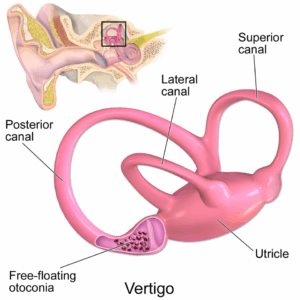
But when they move into the wrong area (semicircular canals of inner ear), they confuse your balance system and sends wrong signals to the brain especially when you lie down, turn, or look up.
This mismatch between what your eyes see and what your inner ear senses is what causes that sudden, spinning feeling.
BPPV isn’t the only reason someone might feel dizzy during head or position changes.
Other inner ear or neurological conditions can sometimes mimic positional vertigo though they often come with additional symptoms.
Meniere’s disease may cause spinning vertigo similar to BPPV, but it’s usually accompanied by hearing loss, a sense of fullness in the ear, and ringing (tinnitus).
Vestibular migraine can also mimic vertigo, but episodes are often longer and linked to light or sound sensitivity and headaches.
Postural Hypotension or orthostatic hypotension causes dizziness when changing positions from lying to sitting or standing due to a sudden drop in blood pressure.
POTS (Postural Orthostatic Tachycardia Syndrome) is another non-ear-related cause, where the heart rate increases abnormally when standing up, leading to a dizzy or unsteady feeling.
When you visit my vertigo clinic, I begin by asking question and replying to your queries on what is positional vertigo. I listen to your symptoms carefully, what triggers it, how it feels, how long it lasts.
Then, I use simple clinical tests like checking pulse and blood pressure in lying and standing position, Dix-Hallpike maneuver, eye movement (nystagmus check) and gait test to confirm if it’s positional vertigo (BPPV) or something else.
Sometimes special balance tests such as VNG, Posturography, Audiometry, MRI and referral to neurologist or cardiologist may be required.
Read How BPPV is diagnosed by positional testing in detail
Understanding the cause and diagnosing of vertigo correctly is the first step to finding the right treatment. Most cases especially BPPV can be treated easily and without long-term medicines.
The right treatment of positional vertigo depends on what’s causing your vertigo and which semicircular canal is affected, if its BPPV.
For BPPV, simple head-positioning maneuvers like the Epley, Semont, Juma, Barbeque roll etc done by your ENT specialist, can fix the problem within minutes.
Other causes may need a different approach, but most are manageable once we know the root cause.
In cases linked to head trauma or age-related changes, a combination of vestibular physiotherapy and time is often helpful.
When positional vertigo symptoms are part of Meniere’s disease or vestibular migraine, treating the underlying condition is key.
Read our next post: BPPV Treatment to learn about Epley’s maneuver, home maneuvers, exercises, and what to do if it keeps coming back.
Over the years, I’ve seen patients struggle in searching treatment of vertigo. Here are a few things I recommend avoiding:
While most episodes of positional vertigo aren’t dangerous (especially when it’s caused by BPPV), it’s important to see a specialist. Early repositioning avoids unnecessary suffering.
These are the red flag where You should see an ENT specialist if:
If you’re unsure if it is positional vertigo or what is causing your spinning, it’s best to consult an ENT, vertigo or vestibular specialist early who diagnoses and treats all forms of positional vertigo or BPPV.
BPPV is most common cause of positional vertigo. But not all positional vertigo are BPPV.
Sometimes yes, but it often returns if not properly treated. Proper treatment reduces long-term episodes.
Many patients feel better within 24–48 hours of the Epley maneuver.
That’s a classic symptom of positional vertigo. It usually points to displaced inner ear crystals, which can be corrected with proper maneuvers.
BPPV is usually due to an inner ear issue, not a brain disorder. However, a specialist can rule out other causes if needed.
Read my next blog on ‘BPPV Treatment’ to understand how simple maneuvers like the Epley can bring relief within 1–2 days.
Positional Vertigo treatment in Navi Mumbai
Dr. Archana Jhawar ENT & Certified Vertigo Specialist is trained in BPPV and Balance Disorders under mentorship of Dr Srinivas Dorasala and American Institute of Balance.
She practices at her ENT and Vertigo clinic-Neoalta Clinic Vashi and Kokilaben Hospital, Koparkhairane, Navi Mumbai. She also consults Online .
Hi, I’m Dr. Archana Jhawar, an ENT specialist with over 24 years of experience. I specialize in tinnitus treatment, vertigo , ear care, and ear surgeries, practicing at Neoalta Clinic, Vashi, and Kokilaben Dhirubhai Ambani Hospital in Navi Mumbai. I’ve trained in vertigo management and Rational Emotive Behavior Therapy (REBT), combining science with compassion to offer holistic, evidence-based care. I’m passionate about writing, poetry, music, yoga, and photography.
Home Sleep Study or Hospital Lab: Choosing the Right Test
Snoring, Gasping, or Fatigue: Is it Nasal Allergy or Sleep Apnea?
Nasal Allergy and Sleep Problems: Why You Feel Tired All Day
When Nasal Blockage Needs Surgery – And When It Doesn’t
Daily Allergy Triggers: Dust, AC, Pets, Pollen and What to Do