
- Home
- Myringotomy and Grommet Insertion
Myringotomy and Grommet Insertion Surgery in Navi Mumbai
Child’s hearing seems reduced? Ear fluid not clearing despite treatment? Recurrent ear infections affecting daily life?

- Vashi, Navi Mumbai
- Mon-Sat
- 12:30 - 1:30 PM
- 7 PM - 9 PM

- Kopar khairane, Navi Mumbai
- Mon, Thur, Sat
- 11 AM - 12 PM
Dr. Archana Jhawar, senior ENT surgeon in Vashi with 25 years of experience, performs myringotomy and grommet insertion at Kokilaben Hospital, Koparkhairane, Navi Mumbai.
What Is Myringotomy and Grommet Insertion?
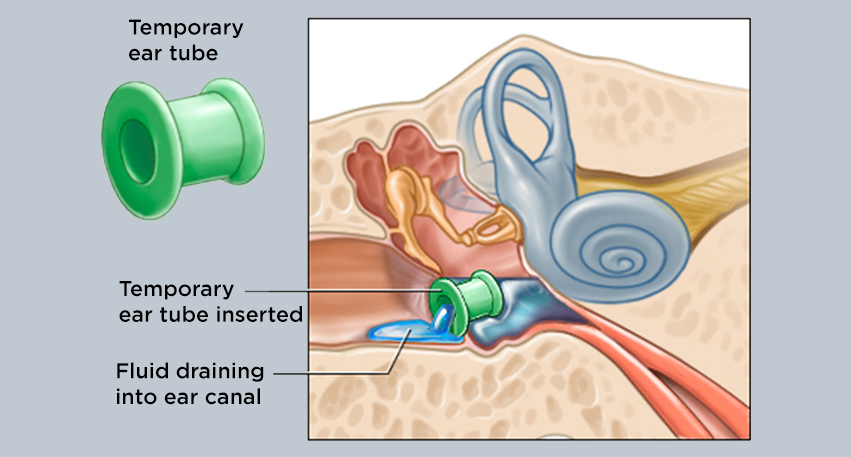
Myringotomy is a small, controlled incision made in the eardrum to drain accumulated fluid from the middle ear. Through this opening, the ENT surgeon places a tiny ventilation tube called a grommet.
When the Eustachian tube does not function correctly, fluid accumulates in the middle ear. A grommet bypasses this problem, allows air back in, and lets fluid drain out.
The grommet is a short, hollow tube, smaller than a grain of rice, made from medical-grade materials such as silicone, Teflon or titanium.
It sits in the eardrum without stitches, held in place by the natural tension of the eardrum tissue around it.
When Is Grommet Insertion Recommended?
Grommet insertion is considered after a complete ENT assessment when:
- Middle ear fluid has been present for an extended period and is associated with documented hearing loss on audiometry
- Hearing loss from persistent fluid is affecting a child’s speech, language development, or learning
- Recurrent ear infections are frequent, severe, or not responding adequately to medical treatment
- Persistent middle ear fluid with hearing loss or significant symptoms despite appropriate observation and management.
- Eustachian tube dysfunction is causing persistent pressure, blocked sensation, or hearing difficulty
The decision to proceed to grommet insertion in Navi Mumbai is based on the combination of duration, degree of hearing loss, age, frequency of infections, and contributing causes.
Grommet Insertion Combined With Adenoid Removal:
In children where enlarged adenoids are contributing to recurrent fluid or infections, grommet insertion is often performed alongside adenoid removal surgery at the same sitting.
This significantly reduces the likelihood of fluid returning.
Read more about adenoid surgery in Navi Mumbai
What Happens During the Procedure?
The procedure is performed using a microscope for precise visualization of the eardrum.
A tiny incision is made in the eardrum.
Any fluid present in the middle ear is gently suctioned out, this relieve pressure in the middle ear.
The grommet is then placed into the incision.
The entire procedure typically takes 10–15 minutes per ear. Both ears can be treated at the same sitting when indicated.
There are no external cuts/incisions, no stitches, and no dressings.
The tube insertion facilitates continuous ventilation of the middle ear, preventing the recurrence of fluid buildup and reducing the risk of infections in the ear.
The advantages of myringotomy and grommet insertion include:
- Improved hearing.
- Reduced frequency of ear infections.
- Prevention of complications associated with persistent middle ear fluid. The procedure is often considered a safe and effective solution for individuals experiencing recurrent ear issues.
Recovery After Grommet Insertion
Hearing improvement, when fluid was the cause of hearing reduction, is often noticed immediately or within the first few days as the middle ear clears and the eardrum begins to move freely again.
Recovery after myringotomy and grommet insertion is generally straightforward. Most children return to normal activity including nursery or school within one to two days. Adults typically resume normal activity or work the same day or the following day.
Some patients notice a small amount of fluid or slight discharge from the ear in the days following the procedure as the middle ear clears. This is expected and settles on its own.
If discharge is persistent, coloured, or accompanied by ear discomfort, a review appointment with ENT surgeon is advised.
Mild discomfort in the first day or two is normal and usually manageable with standard pain relief. Significant pain after the procedure is uncommon and should be reviewed.
Follow-up appointments after grommet insertion are important to confirm the grommet is in position, check that hearing has improved, and monitor for any recurrence of fluid.
How Long Do Grommets Stay In and Will They Need Replacing?
Standard grommets are designed to remain in the eardrum for approximately 6 to 18 months. During this time, the eardrum slowly grows around the grommet and eventually pushes it out naturally. The eardrum heals behind it in the vast majority of cases.
In most children, one set of grommets is sufficient. As children grow, the Eustachian tube matures and the tendency to develop middle ear fluid naturally reduces.
Some children particularly those with persistent allergy, recurrent infections, or ongoing adenoid problems may develop fluid again after the first grommets extrude. In these cases, a second set may be considered.
To emphasize again: These patients require treatment of underlying cause along with myringotomy and grommet placement surgery.
In children who require repeated grommet procedures, longer-stay grommets, sometimes called T-tubes, may be used.
These are designed to remain in place for a longer period and are chosen when repeated short-term grommets have not provided adequate resolution.
Adults who receive grommets for Eustachian tube dysfunction may also occasionally require more than one procedure if the underlying cause is not fully resolved.
Water Precautions After Grommet Surgery
Water entry into the ear through a grommet can occasionally cause an episode of discharge or mild infection. The following precautions are generally advised:
- Bathing and showering : Generally safe without special precautions for most patients
- Swimming: Consult your ENT specialist. Many patients swim without difficulty, but your surgeon will advise based on your specific situation. Custom-fitted earplugs may be recommended for regular swimmers.
- Avoid submerging the head in water: Particularly in pools, lakes, or the sea unless your surgeon has specifically advised it is safe to do so
- Hair washing: Generally fine with normal care to avoid water entering the ear canal directly.
Disclaimer: Precaution requirements vary between patients. Your ENT specialist will give specific guidance based on the type of grommet used and individual circumstances.
Risks and What to Watch For
Grommet insertion is a commonly performed and generally safe procedure. As with any surgical intervention, there are potential risks that patients should be aware of:
- Ear discharge (otorrhoea): Fluid or discharge through the grommet is the most common complication. It usually responds to antibiotic ear drops and settles without further intervention.
- Early extrusion: Occasionally a grommet may come out sooner than expected, before the underlying problem has resolved.
- Grommet blockage: The tube may become blocked with wax or debris, reducing its effectiveness.
- Persistent eardrum perforation: In a small number of cases, the eardrum may not heal completely after the grommet extrudes. This is uncommon with standard grommets and more associated with longer-stay tube types.
- Anaesthesia risks: In children receiving general anaesthesia, standard anaesthetic risks apply. These are discussed with the anaesthetist prior to the procedure.
Contact your ENT specialist if you notice persistent discharge from the ear, increasing ear discomfort, worsening hearing after an initial improvement, or any signs of infection such as fever.
Frequently Asked Questions
At what age can a child have grommet insertion?
Will my child be able to hear normally after grommet insertion?
Can I fly after grommet insertion?
What happens when the grommet falls out?
Is grommet insertion covered by insurance?
Is there an alternative to grommet insertion?
Myringotomy and Grommet Insertion Surgery in Navi Mumbai
Persistent middle ear fluid, recurrent ear infections, or hearing difficulty in your child should be evaluated by a specialist.
Dr. Archana Jhawar, ENT Surgeon with 25 years of experience, performs myringotomy and grommet procedure.
📍 Neoalta Clinic, Sector 17 Vashi
📍 Kokilaben Hospital, Koparkhairane
Serving patients from Vashi, Nerul, Belapur, Kharghar, Koparkhairane, Sanpada, Panvel, Airoli, Ghansoli and across Navi Mumbai.