When Nasal Blockage Needs Surgery – And When It Doesn’t
Entdocnavimumbai
Allergy Care
Not every blocked nose needs surgery. But when nasal blockage continues despite sprays, tablets, or allergy treatment, surgery may be required.
The decision depends on why the nose is blocked in your case and whether the cause can improve with medicines or is structural and persistent.
This blog explains nasal blockage in simple way and helps you understand when surgery is useful and when it is not.
Table of contents
Why Nasal Blockage Does Not Always Improve With Medicines
Medicines help by reducing swelling and congestion inside the nose. This works well when nasal blockage is due to allergy or infection.
However, medicines cannot correct structural problems inside the nose.
If blockage is caused by deviated nasal septum (DNS), enlarged turbinate, or nasal polyps, medicines may reduce symptoms for a short time, but the nose-blockage returns once treatment stops.
In these situations, an ENT evaluation is needed to understand the cause of blockage and decide the next step.
Many people confuse allergy-related blockage with infection. You can read more about this in our blog on allergy vs common cold
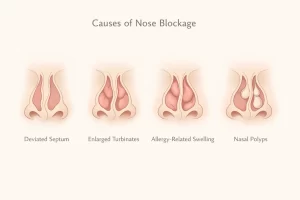
Common Reasons For Long-Term Nasal Blockage
Nasal blockage that lasts for weeks or months can be due to many possible reasons.
Allergy-related Congestion
Allergy causes swollen nasal lining and nose-blockage. This usually improves with allergy treatment and trigger control. Read more about allergic rhinitis treatment here.
Deviated Nasal Septum (DNS)
Nasal septum is thin structure in the midline of the nose which divides it into two halves.
When it is bent one side of the nose may remain blocked most of the time. Medicines can not straighten this septum.
Turbinates are bony structures inside of the nose. They may remain enlarged for long periods and narrow the nasal passage.
Nasal Polyps
Polyps are soft tissue growth which can block the nasal airway. Polyp usually arise from sinuses due to long standing blockage, infection, or allergy and can block the nasal airflow.
Understanding which of these factors is responsible for blocked nose helps decide whether medical treatment is enough or if surgery needs to be considered.
What Is A Deviated Nasal Septum (DNS)
Inside the nose, there is a thin wall made of bone and cartilage that divides the nose into two passages. This wall is called the nasal septum.
Ideally, it should sit near the center but when this wall is bent to one side, it is called a deviated nasal septum.
This deviation causes one nasal passage to become narrow, and in some people this may cause persistent nose blockage.
A deviated septum can cause:
One-sided nasal blockage most of the time
Difficulty breathing through the nose
Mouth breathing, especially during sleep
Worsening blockage during colds or allergies
Recurrent sinus infections in some cases
Nasal sprays and medicines can reduce swelling around the septum, but they cannot straighten the bend itself.
Identifying DNS on examination helps decide whether continued medical treatment is enough or whether surgery may offer better long-term relief.
When Surgery Helps Nasal Blockage
Surgery is advised when nose blockage is persistent and there is no lasting relief with proper medical treatment by an ENT specialist.
Surgery may help when
Nasal blockage has been present for several months
There is difficulty in breathing through the nose despite proper treatment by ENT
One side off the nose remains blocked most of the time
Sleep is disturbed because of blocked nose
There is mouth breathing or snoring or sleep apnea
Recurrent sinus infection due to poor mucus drainage
ENT checkup shows structure issue such as a deviated septum corelating with blockage symptoms.
Surgery is done to correct the physical blockage so that air flow can happen normally.
Decision for surgery is always based on symptoms and examination findings, not on reports alone.
Surgery is not required for all nose blockage. Many people improve with medicines and allergy measures.
Surgery is not needed when:
Nose blockage is occasional, and comes and goes.
Symptoms occur mainly during certain seasons.
Medicines and nasal spray helps in relieving blockage.
Allergy is the main cause and is under control
A deviated septum is present but is not causing any symptoms
Not all deviated nasal septum requires surgery.
It is important to understand that nasal septum is not perfectly central. In fact, in more than 70% healthy individuals, the septum is deviated or naturally bent to one side and does not cause any problem.
So, a deviated septum or DNS itself is not a disease, it is just a normal structure which may vary in position or shape.
Surgery is not done if it not causing any symptoms like persistent nasal blockage, recurrent sinus infections, mouth breathing, or snoring.
In cases where symptoms are well controlled, continued medical treatment, allergy control, and regular follow-up are usually enough.
Surgery is avoided when it is unlikely to give clear additional benefit. The aim is always to relieve symptoms using the least invasive option that works.
What Septoplasty Surgery Actually Does
Septoplasty is an operative procedure done to correct a deviated nasal septum to improve the function of airflow for better breathing.
Creates more space for air to pass through the nose
Improves breathing through the nose Helps in sinus drainage.
Septoplasty corrects the structural blockage due to enlarged bone or bent septum (also known as enlarged nose bone in commonly used term).
What Septoplasty Surgery Does NOT Do
It is important to have clear expectations before considering septoplasty surgery for nose blockage.
Septoplasty is done to improve breathing or as a part of FESS for sinus drainage. It does not address every nasal or sinus symptom like runny nose, sneezing etc.
Septoplasty Does NOT:
• Cure nasal allergy or sensitivity • Prevent all future colds or sinus infections • Change the outer shape of the nose (unless planned with rhinoplasty specifically) • Replace the need for allergy control or nasal care
If allergy or sinus inflammation is present along with a deviated septum, both need to be managed together.
Surgery corrects the structural blockage, while medicines and follow-up care control the lining of the nose.
Understanding what septoplasty can and cannot do helps avoid disappointment and supports better long-term results. Learn where FESS (sinus surgery)is recommended
The decision to advise surgery is never based on a single report or CT scan. It is made by putting together several factors.
An ENT considers: • How severe and persistent the nasal blockage is? • How much it affects breathing, sleep, and daily activities? • Whether medicines have given only temporary or no relief? • Findings on nasal examination and endoscopy. • Whether blockage is structural, inflammatory, or a combination?
Reports such as CT scans are used only when needed and are interpreted along with symptoms and examination findings.
For example a mild septum deviation detected incidentally on a scan may not need septoplasty surgery, while significant symptoms with clear nose blockage on examination by an ENT specialist may benefit from it.
The aim is to recommend surgery only when it is likely to give long-term relief and avoid it when medical treatment is sufficient.
Nasal Blockage, Sinusitis and Surgery – How They Are Connected
Long-standing nasal blockage and sinus problems are often linked, but they are not the same condition.
When airflow through the nose is reduced due to a deviated septum or narrowing inside the nose, normal sinus drainage can be affected.
In such cases, nasal blockage becomes one of the reasons sinus infections keep returning.
However, not everyone with sinus symptoms needs sinus surgery. Many people improve once nasal airflow is corrected and inflammation is controlled with medicines.
First an ENT specialist evaluates nose blockage and he considers the sinus surgery only when sinusitis persists despite proper medical management. Read →chronic sinusitis treatment when medicines fail
Summary
Solution to Nasal blockage is not the same for everyone. Many cases improve with medicines when allergy or inflammation is the main cause.
Surgery is not the first option, and it is not needed for every blocked nose.
It is useful only when blockage is persistent, affect daily life, and examination shows a clear structural reason.
A proper ENT assessment helps diagnosing the cause of nasal blockage, and guides the right next step without unnecessary treatment.
It is advisable to consult an ENT specialist when nasal blockage is not settling with routine treatment to help decide if surgery may give long term relief.
You can consult Dr Archana Jhawar, ENT specialist at Neoalta Clinic, Vashi, Navi Mumbai, for further assessment.
Septoplasty can improve airflow and sinus drainage, which helps reduce repeated infections.
However, allergy and sinus inflammation may still need medical treatment and follow-up care.
About Me
Hi, I’m Dr. Archana Jhawar, an ENT specialist with over 24 years of experience. I specialize in tinnitus treatment, vertigo , ear care, and ear surgeries, practicing at Neoalta Clinic, Vashi, and Kokilaben Dhirubhai Ambani Hospital in Navi Mumbai. I’ve trained in vertigo management and Rational Emotive Behavior Therapy (REBT), combining science with compassion to offer holistic, evidence-based care. I’m passionate about writing, poetry, music, yoga, and photography.


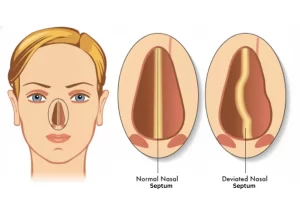 Inside the nose, there is a thin wall made of bone and cartilage that divides the nose into two passages. This wall is called the nasal septum.