During winter, cold air traps pollutant and dust closer to the ground, especially in urban areas like Navi Mumbai.
Breathing in this smog during travel, traffic and outdoor activities can irritate the nose lining. This irritation often triggers allergic rhinitis and sinus inflammation.
The Eustachian Tube Connection
The nose and middle ear are connected by the Eustachian tube. When you have a cold or sinus congestion, this tube can get blocked.
As a result, fluid may get trapped in the middle ear, leading to Otitis Media (Middle Ear Infection).
This can cause ear pain, pressure, or blocked hearing or a muffled sensation, which are commonly noticed during winter.
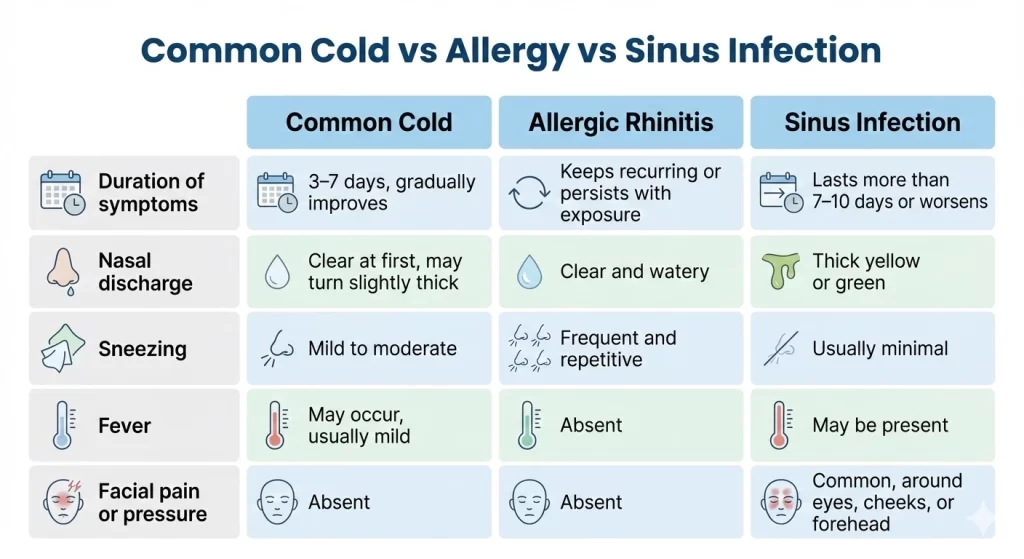
Is It A cold, Allergy, or Infection?
During winter, cold, allergy, and early infection symptoms can look similar, especially in the first few days, which makes it confusing to know what is really going on.
Many people are unsure whether they are dealing with a simple cold, an allergy flare, or the beginning of a sinus or ear infection.
A common cold usually settles within a week. It may start suddenly, sometimes with fever, body ache, or throat irritation, and then gradually improves on its own.
Allergy-related symptoms behave differently. Sneezing is often repetitive, the nasal discharge is usually clear, and there is often no fever.
While, ear pain, blocked hearing, or feeling of ear pressure point towards an ear infection after a cold.
5 Expert Tips to Prevent Winter Ear and Sinus Infections
You can reduce the risk of winter-related ear and sinus infections with a few simple, protective steps.
These measures help keep the nose, sinuses, and ears healthy during colder months.
1. Stay Well Hydrated
Drink adequate fluids, preferably warm water.
Good hydration keeps nasal mucus thin and helps the nose and sinuses clear dust, allergens, and germs naturally.
This becomes especially important during winter, when dry air tends to thicken nasal secretion
2. Use Steam Inhalation Safely
This is a simple and useful winter remedy.
Steam inhalation for 5–6 minutes can help moisturise dry nasal passages and ease congestion.
Avoid very hot steam and stop if you feel discomfort.
3.Protect Your Ears From Cold Wind
Cold air exposure can trigger ear pain (thermal otalgia), especially during early morning walks or two-wheeler travel, which is common in Navi Mumbai.
Cover your ears with a scarf or ear cover when outdoors to reduce direct cold air exposure and prevent ear discomfort.
4. Control Allergies During Winter
Dust, pollution, and indoor allergens often worsen during winter. If you are allergy-prone:
Limit exposure to dust
Use a mask in heavy traffic or construction areas
Keep indoor spaces well ventilated
Consider an air purifier at home to help reduce indoor allergens.
Reducing everyday exposure can make a noticeable difference. Read about daily allergy triggers
5. Do Not Ignore Prolonged Cold Symptoms
If a cold lasts longer than 5–7 days, or is associated with:
Facial pain or worsening headache
Ear pain or blocked hearing
Thick yellow or green nasal discharge
ENT evaluation is important to rule out sinus or ear infection.
When To See An ENT Specialist
Home remedies may help relieve mild winter-related ear and sinus symptoms, but they cannot cure an established sinus or ear infection.
You should consult an ENT specialist if you experience:
Thick, yellowish or greenish nasal discharge
Severe ear pain or ear discharge
Hearing loss or a feeling of fullness in the ear
Facial pain/pressure around the eyes, cheeks and forehead.
Recurrent sinus infection
Recurrent ear infection
An examination by an ENT specialist helps in identifying the cause of the problem and guides the appropriate treatment for sinus and ear infections.
As a general guide, symptoms that last beyond 5 days, worsen instead of improving, or keep returning through the winter should be checked.
Summary
Winter-related ear and sinus problems usually start with a simple cold or nasal blockage.
In many people, dry air, pollution, and congestion prevent the nose, sinuses, and ears from clearing properly.
This is why symptoms such as pain, pressure, or blocked hearing may appear or keep returning during winter.
Timely ENT evaluation helps prevent repeated antibiotic use and ensure underlying cause is treated correctly.
Need Expert Help?
If you are struggling with sinus congestion or ear pain, you can book an appointment with Dr. Archana Jhawar, ENT specialist in Navi Mumbai, to help with precise diagnosis and effective treatment plans.
In winter, the nose is often blocked because of dry air, pollution, and repeated colds.
When the nose does not clear well, pressure builds up in the sinuses and middle ear, which is why symptoms keep returning instead of settling completely.
If ear or sinus infections occur repeatedly every winter, last longer than usual, or require frequent medicines, it is important to visit an ENT.
Early ENT evaluation helps prevent complications and repeated illness.
About Me
Hi, I’m Dr. Archana Jhawar, an ENT specialist with over 24 years of experience. I specialize in tinnitus treatment, vertigo , ear care, and ear surgeries, practicing at Neoalta Clinic, Vashi, and Kokilaben Dhirubhai Ambani Hospital in Navi Mumbai. I’ve trained in vertigo management and Rational Emotive Behavior Therapy (REBT), combining science with compassion to offer holistic, evidence-based care. I’m passionate about writing, poetry, music, yoga, and photography.