
Do I need a hearing aid? This question usually arises when speech feels unclear, conversations are hard to follow, you ask others to repeat, or the TV needs higher volume than before.
These changes suggest reduced hearing, and the next step is an audiometry test to understand how well each ear responds to sound.
If the test shows hearing thresholds below normal hearing range, and the loss is sensorineural (inner-ear or nerve related), a hearing aid may be advised.
This guide explains when you may need a hearing aid clinically, and where it fits in the overall management of hearing loss.
Hearing test is done by an audiologist, after evaluation by an ENT specialist about any correctable issue.
Read blog If you wish to understand When to Choose Ear Surgery For hearing Loss.
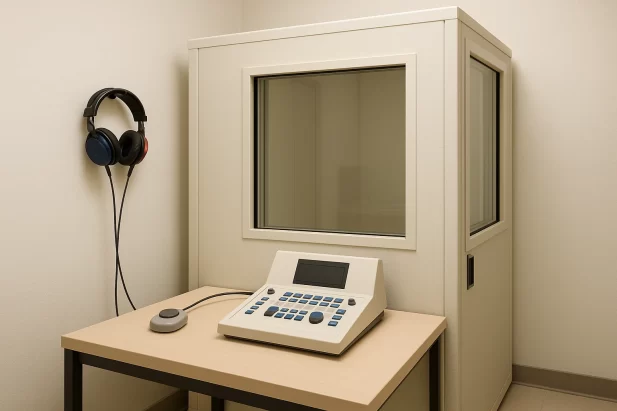
Hearing aids make everyday speech easier to hear when audiometry shows reduced hearing levels.
They cannot repair inner-ear damage, but amplify sound to an audible range so spoken words are clearer.
They help in routine situations such as home conversations, office discussions, phone calls or listening to the TV.
The benefit of hearing aid depends on how much hearing is reduced, which frequencies are affected, and how long the problem has been present.
In mild to moderate permanent hearing loss, hearing aid often give good support for conversation.
In very advanced loss or very poor speech understanding scores on tests, improvement may be limited, even if sounds are louder.
Hearing aids are not used to treat wax, ear infection, fluid behind the eardrum, or clear surgical problems of the middle ear. Those conditions need medical treatment first.
When hearing remains reduced on repeat hearing test after appropriate treatment, hearing aids become part of the long-term management.
A hearing aid is recommended when audiometry shows permanent sensorineural loss, that cannot be improved with medical or surgical treatment.
Sensorineural hearing loss means inner ear and hearing nerve does not respond normally to sound.
It is also advised when speech levels fall below the hearing range on the audiogram chart, and speech becomes unclear at normal conversation loudness.
Many people notice this as needing higher TV volume, missing words in routine conversations or difficult following speech in noisy environments, which leads to testing, and the test result confirms if amplification is needed.
Temporary causes such as wax, ear infection, or middle-ear fluid are treated first. Hearing is then tested.
If the hearing threshold remains reduced and no treatable cause is found, a hearing aid is considered.
Hearing can feel unclear even when the audiogram shows only mild hearing loss. You hear a voice, but the words do not form clearly.
This is because mild sensorineural loss often affects consonants first, and these sounds carry most of the detail needed to understand sentences. When these are missed, speech feels blurred even if the overall loudness seems normal.
This becomes easier to notice in group conversations or when other sounds are present in the room. The ear cannot pick out the main voice as cleanly, so listening feels harder even though the loss is not severe.
Audiometry confirms this pattern by showing dips in the speech-frequency range. When these frequencies fall below normal, clarity reduces even though chart shows mild loss.
Audiometry shows which frequencies each ear hears well and which need support. This helps set the amount of amplification only where it is required, keeping speech clear without making everyday sounds feel too loud.
If the two ears show different results, each device is programmed separately.
Medical causes are addressed first, and hearing aid fitting is done only after the ear is stable.
The test result is then used to select the hearing aid range, adjust loudness limits and confirm comfort at normal listening levels.
Follow-up audiometry helps confirm that the settings continue to match the hearing pattern over time.
For details on device types and models, you can read more on our hearing aid information page.
If you are considering a hearing aid trial or fitting, you can book a Hearing Aid Evaluation and Fitting Audiometry, ear check, and device fitting in one visit.
If you need a refresher on chart interpretation basics, you can review how to read an audiogram.
A hearing aid is needed when hearing levels remain reduced after the middle ear has been treated or when the loss is sensorineural, unrelated to middle-ear.
In such cases, further surgical benefit is not expected, so day-to-day hearing support is provided through amplification.
Ear Surgery is considered when hearing loss is caused by a middle-ear condition that can be corrected, such as a persistent eardrum perforation, fluid that does not resolve, or ossicular disruption.
If audiometry continues to show permanent hearing loss after appropriate treatment, a hearing aid is advised.
Read the blog if you want to know about Ear Surgeries That Improve Hearing
Some patient may need a hearing aid for residual hearing loss after surgery such as tympanoplasty, stapedectomy, or ossiculoplasty, Read about Do I still Need A Hearing aid After Ear Surgery.
You can also read :
Hearing test before ear surgery
Hearing test after ear surgery
A hearing aid may give limited benefit when speech understanding is reduced beyond what amplification can correct.
Sometimes a hearing aid makes sounds louder, but words still do not feel clear.
This happens when speech understanding on testing is low even at comfortable loudness. In such cases, amplification supports hearing levels but cannot fully correct clarity.
In such cases aim is to set the device for usable hearing rather than expect complete clarity.
In the first few weeks increase device use as tolerated. Some daily sounds may seem different at first but this settle.
Voices typically become clearer at normal volume within a month. If you find any discomfort with hearing aid usage, your audiologist can do fine adjustments.
Hearing aid should be stored in a dry storage box and cleaned for any wax. Your audiologist will explain you about routine cleaning and battery checks.
Hearing is rechecked at planned intervals; if thresholds remain stable, settings stay the same. If hearing level changes with time, the device is tuned to match it.
Whether you need a hearing aid depends on what the hearing test shows.
Sensorineural type of hearing loss is usually permanent and does not improve with medicine or surgery. This type of loss require amplification.
Ear Surgery is considered only when the cause can be corrected.
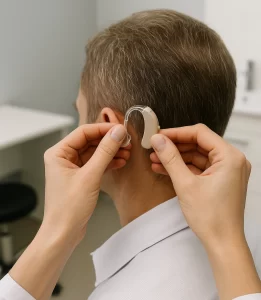
If your test shows permanent hearing loss, you can schedule a hearing aid evaluation and fitting in Navi Mumbai.
The appointment includes an ear check, audiometry, and guidance on best suitable amplification.
For medical assessment of hearing issues, you can visit Dr Archana Jhawar, an ENT for hearing loss in Navi Mumbai at our Hearing and Speech Clinic.
Hearing testing guides that decision. If hearing loss is sensorineural type then hearing aid is needed.
If you increase the volume of TV or find soft sound difficult to follow and your hearing test confirms permanently reduced hearing thresholds, you need a hearing device.
A hearing aid improves audibility, mean it amplifies sound to normal threshold, clarity depends on the perception of sound by brain.
When both ear has reduced hearing, you need two hearing aids and each ear is set according to its own test results.

Hi, I’m Dr. Archana Jhawar, an ENT specialist with over 24 years of experience. I specialize in tinnitus treatment, vertigo , ear care, and ear surgeries, practicing at Neoalta Clinic, Vashi, and Kokilaben Dhirubhai Ambani Hospital in Navi Mumbai. I’ve trained in vertigo management and Rational Emotive Behavior Therapy (REBT), combining science with compassion to offer holistic, evidence-based care. I’m passionate about writing, poetry, music, yoga, and photography.
Home Sleep Study or Hospital Lab: Choosing the Right Test
Snoring, Gasping, or Fatigue: Is it Nasal Allergy or Sleep Apnea?
Nasal Allergy and Sleep Problems: Why You Feel Tired All Day
When Nasal Blockage Needs Surgery – And When It Doesn’t
Daily Allergy Triggers: Dust, AC, Pets, Pollen and What to Do