
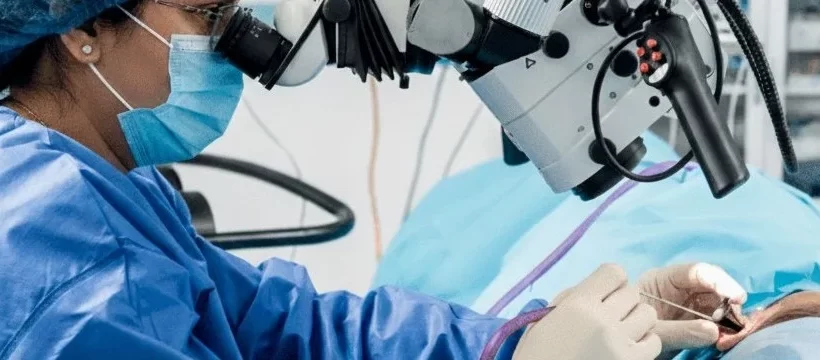
When ear drum tears or gets damaged, the sound becomes faint, the ear may discharge often, and ear infections keep coming back. Tympanoplasty is an intricate microscopic ear surgery for eardrum repair.
In this blog, we’ll understand what tympanoplasty means, when it’s needed, how it’s done, how recovery feels, and what to know before choosing an ENT surgeon for it.
Learn more about eardrum rupture treatment .
Tympanoplasty is an ear surgery to repair the hole in the ear drum to restore hearing and prevent repeated ear infections.
The eardrum or tympanic membrane is a thin delicate membrane which vibrates when sound waves hit it. These vibrations pass to the small bones of the middle ear and then to the inner ear, where sound is processed and sent to the brain. That’s how we hear.
When the eardrum is perforated due to an ear infection, sinus infection, or injury to tympanic membrane, this sound transmission is disrupted.
So, hearing becomes dull and you may feel a sense of blockage or fullness in the ear.
Tympanoplasty surgery repairs this tear under the ENT operating microscope. The ENT surgeon places a small tissue graft, usually taken from behind the ear, to close the hole and re-establish sound transmission.
Once it heals, the new eardrum again works as it should – protecting the ear from infection and helping sounds travel to the inner ear.
In simple words, tympanoplasty is a surgery to rebuild the damaged ear drum to restore the hearing and to keep the ear safe.
A small tear in the eardrum may sometimes heal on its own. But when the hole remains open for weeks or months, it can lead to chronic ear infections (CSOM), ear discharge, and gradual hearing loss. That’s when tympanoplasty becomes necessary.
Most people come to the ENT clinic with stories like, I’ve had ear discharge since childhood, or my ear starts leaking water after every cold or shower. Often, these are signs that the eardrum has been damaged for a long time.
Common reasons your doctor may advise tympanoplasty:
In short, tympanoplasty surgery is needed when the damaged ear drum can’t heal itself and it is affecting hearing and causing repeated ear infections.
Tympanoplasty is a microscopic ear surgery performed to repair a hole in the tympanic membrane (eardrum) and sometimes the tiny hearing bones behind it (ossiculoplasty). It is usually a day-care or one day hospital stay procedure.
Here’s how tympanoplasty procedure generally goes:
Anesthesia: The tympanoplasty is done under local or general anesthesia, depending on age, comfort, and the size of the perforation.
Approach: ENT surgeon gives incision in the ear canal skin or makes a small cut behind the ear.
Graft placement– A thin piece of tissue (often from behind the ear) is used to patch the hole.
Microscope-assisted tympanic membrane repair– The ear surgeon operates in magnified view of ENT operating microscope to ensure the graft is precisely placed.
Ear Packing and dressing A soft medicated pack is kept in the ear canal to support healing.
The tympanoplasty surgery usually takes about 1 to 2 hours, and patients are advised to keep the ear dry and avoid sneezing or pressure for a few weeks after.
With good post-operative care, most patients recover hearing well and stay free from ear discharge.
The exact type of tympanoplasty depends on how large the perforation is and whether the hearing bones in the middle ear (known as ossicles or ossicular chain) are intact or necrosed.
Doctors usually classify tympanoplasty into different types
Only the eardrum has a hole, but the hearing bones are healthy. This is the simplest type 1 Tympanoplasty.
The eardrum and the first tiny hearing bone (malleus) are affected. The surgeon places the graft directly over the next bone (incus) to restore sound transmission.
Both the malleus and incus are damaged, so the eardrum is connected directly to the stapes (the last hearing bone).
These are more complex type of tympanoplasties, where the ear has long-standing infection with damage to middle ear ossicles or mastoid bone cholesteatoma. Additional ossicular reconstruction or mastoid surgery may be required.
The tympanoplasty ear surgery can be simple to more advanced depending on how deeply the middle ear structures is involved. During video otoscopy examination and hearing tests, your ENT surgeon will explain which type of tympanoplasty surgery may suit your ear condition best.
Before the tympanoplasty surgery, your ear surgery specialist will evaluate a few important things – the size and site of the eardrum perforation, the status of hearing bones, and whether there’s any infection or fluid in the ear.
You may be advised:
A hearing test (Pure tone audiometry) to check how much hearing loss has occurred.
An ear examination under microscope or video otoscopy to ensure the ear is dry and infection-free.
Sometimes, HRCT scan of the temporal bone see the middle ear ossicles and mastoid bone.
Routine blood tests and fitness check-up, especially if you have diabetes, hypertension, or any chronic illness.
If there’s active ear discharge, your doctor will first treat it with antibiotics and ear-drops before scheduling the surgery. A clean, dry ear gives the best tympanoplasty results.
You’ll also be asked to take precaution to avoid cold, cough, or nasal allergy around the surgery date, since sneezing or blocked nose can affect middle ear pressure and healing of ear drum graft.
Most patients recover smoothly after ear drum repair surgery.
Our patients go home the same or next day. I usually advise my patients to start walking on same day of ear surgery and resume light work within a few days. It takes around 21-28 days for total ear drum healing.
Many patients describe a mild blocked feeling in the ear, discomfort, or a little blood-stained discharge from the ear canal. This usually settles.
At my ENT clinic in Navi Mumbai, I guide each patient step by step during recovery. Here’s what most people experience after tympanoplasty.
A mild Pain killer is prescribed for initial 2-3 days. Continue the prescribed antibiotics and ear-drops as directed.
Avoid strenuous work, air travel, or heavy lifting for about 2–3 weeks.
Water entry can cause infection and delay healing, so use a small piece of cotton smeared with petroleum jelly while bathing. A reusable ear protection shower cap can make this easier for daily use.
This can disturb the ear drum graft and healing.
At our Navi Mumbai ENT clinic, tympanoplasty recovery follow-ups are typically scheduled after 7 days, when the dressing or packing is removed and another visit after 3–4 weeks to check whether graft has taken up well.
My post t’plasty patients get repeat Audiometry 2-3 month after ear surgery to confirm hearing improvement.
In most cases, patients notice that sounds feel clearer and ear discharge stops completely, within a few weeks. Full hearing improvement can take a few months as the middle ear regains its normal function.
You can read hearing test after ear surgery blog here..
For a complete recovery timeline and tips after ear surgeries like tympanoplasty or mastoidectomy, read our detailed aftercare guide. Recovery After Ear Surgery blog
A successful tympanoplasty surgery means after repair ear is dry, safe and conductive hearing loss is corrected.
With proper ear microscopic guidance, tympanoplasty has very high success rate about 98-99% in experienced hands.
The success of ear drum repair depends on- how well the infection is controlled before surgery, how meticulously microscopic ear surgery is performed, how carefully the post-op precautions are followed.
Presence of adenoid hypertrophy, repeated sinus issues and eustachian tube block can affect graft take rate, so managing them is important for best outcome and also to prevent recurrence.
Main benefits after a successful tympanoplasty:
No more ear discharge– The ear becomes dry and infection-free.
Hearing Improvement – Repair of ear drum improves sound transmission so sounds feel clearer
Freedom for water activities– You can swim without constant worry about water entry.
Better ear health– The risk of future infections and complications reduces significantly.
Tympanoplasty is generally a safe and well-tolerated procedure when performed by an experienced ENT specialist. Modern microscopes, finer instruments, and improved grafting techniques have made the results highly reliable.
Like any surgical procedure, there are small risks such as mild infection, temporary change in taste, or slight dizziness for a day or two. These usually settle on their own with proper care.
Your doctor will take every precaution before and after surgery to minimize even these minor possibilities.
In short, with experienced hands and timely follow-up, tympanoplasty is successful and safe ear surgery in modern ENT practice.
A perforated eardrum may cause repeated ear discharge and mild hearing loss, or discomfort while bathing or catching a cold. When it doesn’t heal on its own, tympanoplasty can safely restore the ear’s normal function.
Tympanoplasty helps close the hole, stop discharge, and improve hearing. The surgery is safe, reliable, and most patients recover well within a few weeks.
If you’ve been experiencing persistent ear discharge or ear infections it’s best to visit an ENT specialist. Early treatment or surgery gives better outcome and higher success.
For patients in and around Navi Mumbai, microscopic ear surgery available at Dr. Archana Jhawar’s ENT Clinic.
If your ENT recommends surgery, you can learn more about Tympanoplasty surgery in Navi Mumbai on our detailed service page.
Tympanoplasty is a microscopic ear surgery to repair a hole in the eardrum. It helps stop ear discharge, related ear infection and improve hearing.
Usually, tympanoplasty surgery takes about one to two hours. Most patients go home the same day after a short observation period.
No, Tympanoplasty is done under anesthesia, so you won’t feel any pain during surgery. Mild discomfort after surgery is common and settles in a few days.
In experienced hands, tympanoplasty success rate is about 98-99%. The ear stays dry, hearing improves, and ear-infections reduce significantly.
You can return to light work in a few days. Avoid water entry, air travel, and heavy lifting for 2–3 weeks as the ear heals.
Recommendation to avoid water entry may vary with different ear surgeons. Dr archana Jhawar usually asks to avoid water entry for around 6 weeks

Hi, I’m Dr. Archana Jhawar, an ENT specialist with over 24 years of experience. I specialize in tinnitus treatment, vertigo , ear care, and ear surgeries, practicing at Neoalta Clinic, Vashi, and Kokilaben Dhirubhai Ambani Hospital in Navi Mumbai. I’ve trained in vertigo management and Rational Emotive Behavior Therapy (REBT), combining science with compassion to offer holistic, evidence-based care. I’m passionate about writing, poetry, music, yoga, and photography.
Home Sleep Study or Hospital Lab: Choosing the Right Test
Snoring, Gasping, or Fatigue: Is it Nasal Allergy or Sleep Apnea?
Nasal Allergy and Sleep Problems: Why You Feel Tired All Day
When Nasal Blockage Needs Surgery – And When It Doesn’t
Daily Allergy Triggers: Dust, AC, Pets, Pollen and What to Do