If you’ve been advised ear surgery, a hearing test before ear surgery is an essential step. This test helps your ENT specialist understand your current hearing, plan the best treatment for you, and what kind of improvement we can expect after surgery.
As a senior ENT specialist in Navi Mumbaiwith over 24 years of experience, here’s my answers to your common questions about this.
Table of contents
Why Is a Hearing Test Important Before Ear Surgery?
Before planning any ear surgery, your ENT need to check your hearing, how well sound travels through the ear canal, and whether the inner ear is functioning well.
Test shows if your hearing loss is due to an issue in your outer/middle ear (like eardrum perforation or infected bones) or nerve-related, which may not improve even after surgery.
This pre-operative audiogram helps your ear surgeon decide:
What type of hearing loss you have – conductive vs sensorineural loss
How severe your hearing loss is and which part of your ear is affected
Whether ear surgery can truly improve hearing.
Which surgical technique is safest and most effective for you.
The expected hearing improvement range with ear surgery.
Whether surgery is the best choice for you or if medicine or hearing aids is better suited to your needs, especially in case of otosclerosis and adhesive otitis media)
What Happens If You Skip the Test?
Without a pre-surgery hearing test, we can miss inner ear or nerve related hearing loss and this may lead to disappointments if hearing doesn’t improve after ear surgery.
Insurance and medical guidelines also recommend audiometry before planned ear surgeries for comparison after the surgery.
An ear examination shows the condition of the eardrum, but only a hearing test tells us how the ear is actually working.
A recent audiometry report is essential even if you have an older test because hearing can change over time, and your surgeon needs the latest picture before operating.
These checks ensure that the surgery is planned precisely for your needs.
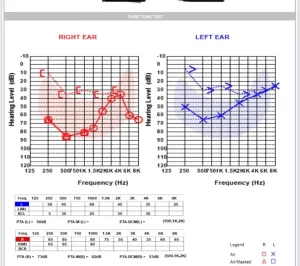
Air and Bone Conduction Levels
This shows how sound travels: – Through your ear canal, eardrum, and bones to the cochlea (air conduction) – Directly to the inner ear (bone conduction)
This test helps distinguish conductive hearing loss (middle ear issues) from sensorineural hearing loss (inner ear cochlea or nerve problems). It also shows degree of hearing loss and which sound frequencies are affected.
ABG shows the difference between your air conduction and bone conduction levels.
If bone conduction is good but air conduction is poor, it usually means a problem in the middle ear that surgery can fix.
A large ABG suggests: – Hole in the eardrum – Damaged ossicles – Stapes fixation – Chronic middle ear infection
ABG helps guide surgical decisions and whether tympanoplasty, ossiculoplasty, or stapes surgery can improve hearing.
Read: Ear Surgeries That Improve Hearing
Speech Clarity Tests (SRT / SDS)
These tests check: – How well your brain understands soft speech? – Are words getting distorted? – Will surgery improve clarity?
If clarity is low, it may indicate nerve weakness that surgery cannot fix.
This sets realistic hearing expectations for surgery.
Middle Ear Pressure
It shows: – Eustachian tube function – Fluid or negative pressure – Eardrum stiffness – Retraction pockets – Early signs of cholesteatoma
Reflex Tests (If Needed)
Used when otosclerosis is suspected. Absence of reflex with a specific ABG pattern supports stapes fixation diagnosis.
Together, these hearing tests give a full picture of your hearing, clarity, and middle-ear health.
This helps your ear surgeon plan accurately and set realistic hearing outcomes.
How Audiometry helps your ENT Plan Ear Surgery?
Pre-operative hearing tests give your ENT surgeon a clear picture of how your ear is working and help with surgical plan.
But the decision to operate is never based on the audiogram alone, it depends on your overall clinical picture.
For surgeries like stapes surgery (otosclerosis) or ossiculoplasty, the audiogram helps decide whether surgery is recommended.
In tympanoplasty or mastoid surgery, the main goals are ear safety and infection control, so these surgeries are still needed even if hearing cannot fully improve.
Audiogram pattern may guide your ENT choose the most suitable procedure for your ear.
Audiometry helps understand how much hearing may improve, but hearing improvement is secondary in these cases. The main goal is to repair the eardrum and protect the ear
When Ossiculoplasty Is Needed?
If the middle-ear bones (malleus, incus, stapes) are damaged or missing.
ABG is large and flat across frequencies
Tympanometry is often abnormal
Here, the pre-operative audiogram helps the ENT surgeon decide the type of ossicle-reconstruction needed and whether hearing improvement is likely.
When Tympanoplasty with Ossiculoplasty done Together?
In a patient with ruptured ear drum, when Audiogram shows conductive hearing loss with a large ABG, that may mean hearing bones are also damaged or fixed.
In such cases ossiculoplasty is considered alongside tympanoplasty for optimal hearing restoration.
When Stapes Surgery Helps in Otosclerosis?
If a classic audiogram pattern suggests stapes fixation: • Good bone conduction • Air conduction significantly reduced • Reflexes absent
Here, the audiogram helps confirm if stapes surgery is suitable and predicts the level of hearing improvement after stapedotomy.
When Hearing Loss Will Not Improve After Surgery?
Hearing improvement after ear surgery may be limited when
Speech clarity is very poor
There is a significant sensorineural component
Mixed loss has limited improvement potential
Pre-operative hearing testing protects you from unnecessary procedures, especially in cases of stapedectomy/stapedotomy.
When Mastoid Surgery Is Performed
Mastoid surgery is mainly done to remove infection or cholesteatoma. Hearing improvement is secondary.
Key Take Aways
Hearing tests guide expectations from ear surgery but the surgery decision is based on the overall clinical picture.
Tympanoplasty and mastoid surgery are primarily for ear safety, hearing gain is a secondary goal.
Ossiculoplasty and stapes surgery rely on audiometry to predict hearing improvement.
Pre-operative testing ensures safe surgical planning and avoids unnecessary procedures.
Next Step: Book Your Pre-Operative Hearing Test
A pre-op hearing test is the first step to best and safer ear surgery outcome.
Hearing tests before and after ear surgery help us measure and compare, the status of the hearing. You can read next blog about hearing test after ear surgery
If you are scheduled for ear surgery or still unsure about your hearing, you can book a simple pre-operative hearing test at our Vashi ENT & Hearing clinic.
Our expert audiologist evaluations guide the ENT surgeon and set realistic expectations.
No. Pre-operative hearing test is simple and completely painless. You just listen and respond to sounds while sitting in a quiet room. You can read the blog to know how a hearing test is done.
Hearing test is done before ear surgery to know how your ear is working and plan the most accurate surgery. It shows where the problem is and It also helps your ENT predict how much hearing may improve after surgery and sets realistic expectations
Absolutely. Old reports help us compare and track changes in hearing over time, but a fresh pre-operative test is always recommended to know latest hearing and for precise surgical planning.
Most insurance plans cover basic hearing tests when they are part of pre-surgery evaluation. Still, it’s best to check with your insurer or clinic team.
Not directly. The test helps plan the surgery, guides the approach, and predicts likely improvement. It does not automatically cancel or confirm surgery except in stapedotomy or stapedectomy.
About Me
Hi, I’m Dr. Archana Jhawar, an ENT specialist with over 24 years of experience. I specialize in tinnitus treatment, vertigo , ear care, and ear surgeries, practicing at Neoalta Clinic, Vashi, and Kokilaben Dhirubhai Ambani Hospital in Navi Mumbai. I’ve trained in vertigo management and Rational Emotive Behavior Therapy (REBT), combining science with compassion to offer holistic, evidence-based care. I’m passionate about writing, poetry, music, yoga, and photography.

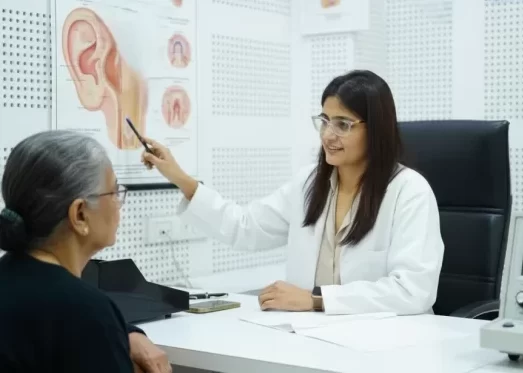
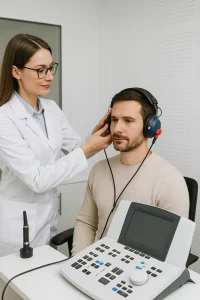 It checks how well you hear, the degree of hearing loss and whether the problem is in the middle ear or inner ear.