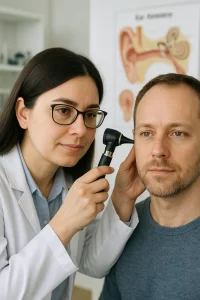
Recurring ear infection is common concern in adults and children. Most ear infections get better within a few days to a week. But sometimes, ear infection keeps coming back even after antibiotic treatment.
Recurring ear infections or chronic otitis media usually happen because of allergies, sinus infections, Eustachian tube blockage or a hole in the ear drum. Treatment of repeated ear infection includes antibiotic medicines, ear drops, or surgery to repair the eardrum.
Managing allergies and sinus issues early can help prevent these infections from coming back.
Why Do Recurring Ear Infection Happen? Common Causes
If you keep getting ear infections again and again, it’s a sign that something inside your ear, nose, or throat isn’t working as it should. Common causes of recurrent ear infection are following-
Blocked Eustachian Tube
The most frequent reason of repeated ear infection is a blocked Eustachian tube, the narrow tube that connects your middle ear to back part of your nose and keeps middle ear ventilated.
When it gets blocked due to cold, sinus congestion, or allergy, air does not enter the middle ear causing vacuum. So, fluid collects, and germs easily multiply.
Incomplete Healing After Previous Ear Infection
Sometimes, even though ear pain and ear-discharge settle, a small pocket of fluid or inflammation stays behind the eardrum. It later flares up after a cold, water exposure, or weather change.
Hole in the Eardrum
Ear drum covers the middle ear and acts as barrier. A hole or thinning in the eardrum makes the middle ear vulnerable. Water, bacteria, or fungus can repeatedly enter the middle ear and cause ear infection.
Throat or Nose ENT Conditions
In children, enlarged adenoids, cold or throat infections are common triggers to ear infection. In adults, chronic sinusitis, DNS nasal blockage, repeated throat infection, and allergies are usually to blame.
Sometimes recurrent ear infection is otitis externa or fungal ear infection (otomycosis). Use of ear buds, oil in the ear, water entry or swimming may cause this. You can read this in detail here fungal ear infection or otomycosis.
If these underlying problems aren’t treated, the infection keeps coming back despite antibiotics or ear drops. Identifying and correcting the cause, whether it’s a blocked nose, ear drum issue, or allergy, helps prevent repeat ear infections and protect your hearing long-term.
Difference Between Acute and Chronic Ear Infections
Ear infection can heal quickly in some patient while in others last for weeks or keep returning again and again.
Acute Ear Infection (ASOM)
An acute ear infection starts suddenly often after a cold, sore throat, or nasal congestion. The infection spreads through the Eustachian tube into the middle ear causing ear pain, blocked feeling, fever, or yellow discharge if the eardrum bursts.
With proper medication, it usually settles within a week or two. However, it may turn into a persistent or recurrent problem.
Chronic Ear Infection (CSOM)
A chronic ear infection means that the infection lasts for a long time, keeps coming back, or never completely clears.
It can happen if there’s a hole in the eardrum, long-standing Eustachian tube blockage or a cholesteatoma (a skin growth inside the ear).
Chronic middle ear infections need detailed ENT evaluation and often require surgical repair, such as tympanoplasty or mastoid surgery, to control infection, restore hearing and prevent further damage.
How to Know Which One You Have
If your ear pain and discharge come on suddenly after a cold and resolve completely with treatment, it’s likely an acute infection.
If the symptoms keep returning, or there’s a persistent discharge, hearing loss, or known eardrum perforation, it’s usually chronic.
A simple ear examination and hearing test by an ENT specialist can confirm this and guide the best line of treatment.
How to Prevent Repeated Ear Infections
Most people can prevent repeat ear infections once the underlying cause is treated and a few daily habits are corrected.
Keep the Ears Dry and Clean
Avoid letting water enter the ear while bathing or swimming, especially if you’ve had ear infections before or have a small eardrum perforation.
Use a clean towel to dry the outer ear by gentle dabbing; don’t insert earbuds, towels, pins, or tissue paper inside. Even mild irritation can start a fresh ear infection.
Treat Throat, Nose and Sinus Problems
If you have frequent colds, allergies, or nasal blockage, sinus congestion, repeated throat infection, get them treated in time. Controlling these helps keep middle ear pressure normal and prevents fluid buildup.
Treat Eardrum Problems
If ear infections keep returning, your ENT may suggest an ear examination and hearing test to check for small perforations or thinning of the eardrum.
Many people use leftover antibiotic ear drops or home remedies each time the ear discharges.
This can worsen resistance and mask the real problem. It’s always better to take ENT advice before using any ear drops, especially if you’re unsure about eardrum condition.
Treatment of tonsillitis or enlarged adenoids In Children
In children under 12 years of age ear drum has high chances of natural healing. Treating repeated tonsil infections,enlarged adenoidsor frequent cold is critical in children to prevent repeated ear infection.
Overall Health
Repeated ear infection is common if our immunity is low. Taking care of overall health may help prevent recurring ear infection. Eating healthy food, fruits, adequate sleep and hydration is basic to our natural immunity.
Avoidingprocessed food, sugar, chilled items and any food you are allergic to is good for overall health and may help prevent recurrent ear infection.
Treatment Of Recurrent Ear Infections
How to fix ear infection?
Best treatment of repeated ear infections is to identify the root cause and treat it. Focus is to clear the infection, make the ear dry and restore hearing and prevent complications.
Medical Treatment
For many patients, a course of antibiotics, anti-allergy medicines, or decongestants helps clear the ear infection and open the Eustachian tube.
To control earache, pain relievers and warm compresses are helpful. Steam inhalation, nasal saline rinses, or steroid nasal sprays may be advised to reduce congestion and tube blockage.
Ear drops are used only after the eardrum is examined because using the wrong drops when there’s a small hole can worsen infection or affect hearing.
Identifying and Treating the Source
If persistent or recurring ear infections are related to sinusitis, adenoids, or allergy, these need parallel management.
If there’s a hole in the eardrum or chronic infection in the bone behind the ear (mastoid), surgery gives lasting relief.
Tympanoplasty repairs the eardrum and stops infection from entering the middle ear.
Mastoid surgery removes chronic infection in the mastoid bone or cholesteatoma.
Myringotomy and Grommet insertion(ventilation tubes) may be advised in children with repeated middle ear fluid buildup to improve hearing and ventilation.
After treatment, protecting the ear from water and promptly treating colds or allergies is important to prevent future ear infection.
Home Care for Ear Infection
It is best to visit an ENT specialist specially in young children for recurring ear infection, but while at home, you can take over- the-counter pain medicines like paracetamol or acetaminophen and apply warm compresses to the affected ear to get relief from pain or discomfort.
Do not use ear buds, oil or any other items in the ear that may actually worsen the ear infection.
Many ear infections resolve on their own but if your infection returns even after antibiotics or if you notice repeated ear discharge, hearing loss, or discomfort with air travel or swimming, it’s best to visit an ENT specialist.
If you find yourself using ear drops often, or if pain and discharge return after every cold or water exposure, it’s time to get your ears checked by an ENT specialist.
Take away
You should not ignore recurrent ear infections as it may cause long term complications such as hearing loss, eardrum damage, damage to hearing ossicles, infection in the mastoid bone and rarely spread of infection beyond ear (such as brain).
With an endoscopic ear, nose, throat examination and a hearing test (audiometry and tympanometry), an ENT specialist can find the exact cause and start the right treatment, medical or surgical, to fix a recurring ear infection.
Most people get long-term relief from recurring ear infection once the real issue is treated whether it’s a small eardrum hole, blocked Eustachian tube, or chronic sinus infection.
If you are getting repeated ear infection, it usually means that there is some underlying ENT issue causing fluid collection behind the ear drum or repeated entry of germs. It could be blocked eustachian tube, allergy, sinus congestion or a hole in the ear drum.
Yes. Even after antibiotics you can get ear infections again. When you catch another cold or sinusitis or when your immunity drops this ear infection can recur. This is the reason a follow up consultation with ENT is important.
To prevent ear infections, you can take certain precautions. Keep the ear dry, do not insert earbuds, Q-tips or any other object in the ear and treat your allergy or sinus issue early.
If you have hole in the ear drum longer than 3 months, then surgery to repair the ear drum may be needed to prevent repeated ear infections.
Many ear-infection can improve with proper treatment of root cause and antibiotic treatment.
However, if there is hole in the ear drum, or mastoid infection (cholesteatoma) then tympanoplasty or mastoidectomy may be needed.
About Me
Hi, I’m Dr. Archana Jhawar, an ENT specialist with over 24 years of experience. I specialize in tinnitus treatment, vertigo , ear care, and ear surgeries, practicing at Neoalta Clinic, Vashi, and Kokilaben Dhirubhai Ambani Hospital in Navi Mumbai. I’ve trained in vertigo management and Rational Emotive Behavior Therapy (REBT), combining science with compassion to offer holistic, evidence-based care. I’m passionate about writing, poetry, music, yoga, and photography.


 For many patients, a course of antibiotics, anti-allergy medicines, or decongestants helps clear the ear infection and open the Eustachian tube.