

BPPV is spinning sensation during certain position changes or head movements. It is most common cause of dizziness due to inner ear disorder.
You can read detail in previous blog post about What is Positional Vertigo.
BPPV or Benign paroxysmal positional vertigo means-
B – Benign: The condition feels scary but is not life-threatening.
P – Paroxysmal: Symptoms come in sudden, brief episodes
P– Positional: Changes in head position
V – Vertigo: A sensation that the surrounding is spinning
There could be associated symptoms such as Nausea, vomiting and rapid and involuntary eye movement (nystagmus)
Feeling dizzy right after waking up is often linked to how balance centre in your inner ear reacts to sudden changes in head position.
Inside your inner ear are semicircular canals for balance that help your brain understand your head position in space.
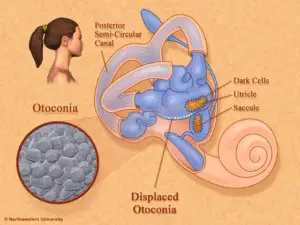
BPPV occurs when tiny calcium crystals (called otoconia) in your inner ear dislodge from their usual place and move into one of these balance canals (usually the posterior semicircular canal).
As a result, each time you roll over in bed, sit up quicky, lie down to rest or anyway move your head, these misplaced crystals confuse your balance sensors and send false signals to the brain.
This triggers a brief but intense spin sensation.
Morning dizziness can also happen due to other reasons like low blood pressure, dehydration, certain medications, or even low blood sugar.
That’s why it’s important to get a proper evaluation and treatment by a vertigo specialist.
In some cases BPPV can resolve on its own within a few weeks. But waiting it out can be frustrating and risky.
Many patients suffer repeated vertigo attacks, falls, and anxiety while hoping for natural recovery.
When correctly diagnosed BPPV is one of the most easily treatable causes of vertigo.
A canal-specific repositioning maneuver like Epley or Semont, performed by a trained ENT specialist or neurotologist, often brings faster and lasting relief from positional vertigo.
ENT specialists or neuro-otologists use a combination of clinical history, positional tests and balance assessments to determine:
It is most important to get detailed history of symptoms to navigate towards correct diagnosis.
Onset duration, triggers (e.g. turning in bed) , Episodic vs constant dizziness, and any associated symptoms like nausea or hearing loss, tinnitus etc.
For BPPV diagnosis, a well-performed positional test is enough. A vertigo specialist can determine the correct canal.
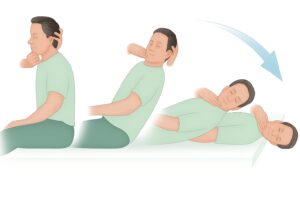
Used to diagnose posterior canal BPPV where your head is moved into a specific position to trigger vertigo and nystagmus
(involuntary eye movements).
Detects lateral (horizontal) canal BPPV. Head is turned side to side in supine position.
To diagnose anterior semicircular (SSC) canal BPPV
Eye movements provide clues about the affected canal. direction, latency, fatigability help determine the canal involvement.
These aren’t specific for BPPV but help assess vestibular function and rule out red flags:
BP and pulse in lying and standing position to check for POTS and postural hypertension
Vestibular tests like Videonystagmography (VNG) and Posturography, when diagnosis is unclear.
CT or MRI is rarely needed unless something more serious such as brain involvement is suspected.
Proper BPPV Diagnosis involves:
BPPV is highly treatable, and in most cases, does not require long-term medication.
The first step in BPPV treatment is accurately diagnosing the BPPV and identifying which semicircular canal is affected.
Next your ENT specialist will perform simple repositioning maneuver specific for that particular canal to bring immediate relief from positional vertigo.
These are physical movements to move the misplaced crystals back to the original location in the inner ear. These are guided by your vertigo specialist or vestibular therapist.

• The most common and effective repositioning technique
• Can be done in the clinic or taught for home use
• Usually provides relief from spinning vertigo in 1–3 sessions
• Involves turning your head and body through a specific sequence to shift crystals
• Faster altertive to Epley
• Requires precise technique and supervision
• Useful when Epley is not tolerated or ineffective
• Side-lying maneuvers
• Often effective for horizontal/lateral canal involvement
• Involves rotating the patient 360° in stages
• Very effective but more technical
• Best done under supervision in the clinic
Stay tuned for detailed blog posts on each maneuver.
Brandt-Daroff is a commonly prescribed home exercise for vertigo Retrain your balance system and reduce the chances of recurrence.
How to do brandt-Daroff Excercies at home?
1. Sit upright on a bed.
2. Move quickly into a side-lying position, nose pointed upward at 45°.
3. Hold for 30 seconds or until dizziness passes.
4. Return to sitting.
5. Repeat on the other side.
▶️ Do this 5 times per session, twice daily, for 2 weeks.
A vestibular therapist designed custom exercises-
• Helps your brain adapt new signals and Improve balance
• Reduce motion sensitivity
• Enhance recovery after repositioning
Post-maneuver home care supports recovery and prevents BPPV recurrence
• Avoid sudden head turns, especially when getting up from bed
• Use 2 pillows or elevate the head of your bed slightly for 1-2 days
• Stay well hydrated
• Avoid sedentary life style
• Balance and muscle strengthening home exercises
• Reduce salt and caffeine intake (helps inner ear health)
Even though Benign Paroxysmal Positional Vertigo (BPPV) is one of the most treatable causes of dizziness, patients (and sometimes even doctors) unknowingly take the wrong approach that delay the relief.
Common Mistakes That Worsen or Prolong BPPV
• Assuming all dizziness is BPPV: Not all vertigo is positional vertigo. Vestibular migraine, Ménière’s disease, vestibular neuritis or postural hypotension can mimic BPPV. A proper diagnosis is crucial.
• Using Betahistine, Cinnarazine etc as a long-term solution: These medications may suppress symptoms. They do not reposition the inner ear crystals so they never solve the root cause of BPPV.
• Waiting for it to go away on its own: BPPV may go away naturally in some cases, but often it persists unless treated with targeted repositioning maneuvers for displaced crytals like Epley or Semont.
• Trying YouTube exercises to treat BPPV without a diagnosis: One may attempt an Epley maneuver when the issue is lateral canal BPPV or worse not BPPV at all. Wrong diagnosis or wrong technique can worsen symptoms or trigger conditions like PPPD (Persistent Postural-Perceptual Dizziness).
These mistakes can delay recovery and worsen balance issues. BPPV is highly treatable when approached correctly.
Anti-vertigo medications (like betahistine, cinnarizine, or prochlorperazine) may provide symptom relief, but they do not treat BPPV itself.
I often see patients prescribed a cocktail of vestibular suppressants for weeks, or even months with little to no improvement. This can suppress natural central compensation and delay recovery.
Think of it this way:
If a bone is fractured and you are having pain, you don’t just take painkillers you reposition the bones and fix the fracture..
Similarly, cause of BPPV is loose calcium crystals (otoconia) moving into the semicircular canals of the inner ear, so the best treatment for BPPV is to gently guide these crystals back to where they belong using repositioning maneuvers.
We need to correct the root cause not just mask the vertigo symptoms by medication.
We have unlimited access to unverified information online about BPPV treatment and we may have tendency to self-diagnose and self-treat.
I’ve had patients who misdiagnosed themselves based on what they saw online, and performed home exercises incorrectly or excessively, leading to:
• Worsening symptoms
• Incorrect canal targeting
• Long-term complications like PPPD (chronic dizziness even after BPPV is gone)
Chat GPT or Google can’t replace clinical judgment, especially when it comes to diagnosing which canal is causing positional vertigo or differentiating BPPV from similar conditions.
As a neuro-otologist, I often see patients who’ve already consulted multiple general physicians, neurologists, or even ENTs but still not received a clear diagnosis or misdiagnosed as BPPV.
BPPV diagnosis requires vestibular-specific training and experience. Most ENTs or neurologists don’t assess all canals, and many aren’t familiar with non-posterior canal BPPV.
As the saying goes: “We cannot see what our brain does not know. Unless a clinician is trained in vestibular evaluation, BPPV especially non-posterior canal variants can be missed.
Common Diagnostic Gaps:
• Only performing the Dix-Hallpike test, which detects posterior canal BPPV
• Not checking for lateral or anterior canal involvement
• Not repeating positional tests if unclear or negative on the first attempt
• Relying solely on patient history without objective testing or observation of nystagmus.
Best option is to meet a neuro-otologist or an ENT specialist -Audiologist team that specializes in vestibular medicine (vestibular specialists).
They can differentiate BPPV from other positional vertigo types and treat it accordingly.
There is growing awareness about vestibular disorders in India and pioneers in the field are revolutionizing the vertigo diagnosis and management like Dr Srinivas Dorasala, Dr Prateek and team. I’ve been fortunate to learn under their mentorship and have seen the difference it makes in accurate diagnosis and treatment of BPPV or vertigo.
If dizziness continues or worsens even after initial treatment, a follow up visit with your ENT specialist or neuro-otologist is required.
• Dizziness persists despite home maneuver attempts
• Symptoms continue or worsen even after initial treatment
• You feel imbalance or unsteadiness even when not turning your head
• You experience hearing loss, tinnitus (ringing in the ears), or ear fullness
• Your dizziness feels unusual, prolonged, or doesn’t match typical BPPV patterns
There are many possible reasons for dizziness after BPPV treatment by repositioning maneuver:
• Ca carbonate crystals left in the same canal.
• Canal is converted.
• The wrong canal is being targeted
• You have persistent or atypical BPPV (e.g., cupulolithiasis- A “stuck” crystal form of BPPV that requires specific maneuvers
• You’re dealing with a different type of vertigo or additional issues (like Ménière’s disease or vestibular migraine)
• There’s a psychological overlay such as anxiety or PPPD (Persistent Postural-Perceptual Dizziness)
Yes, BPPV recurrence is more common in people who:
• Are over age 50
• Have Migraine
• Have Vitamin D deficiency, vitamin B12 and amino acids
• Lead a sedentary life style
• Have history of head injuries
• Diabetics, hyperlipidemia, hypertension or atherosclerotic heart disease.
Patients often ask – what can I do to keep my BPPV from coming back?
With proper follow-up, daily home exercises, and lifestyle adjustments, most recurrences can be managed easily.
Research indicates that Vitamin D Supplementation for Benign Paroxysmal Positional Vertigo reduced recurrences. Hong et all, Otology & Neurotology 2022