That sudden spinning vertigo or whirl may not be just fatigue or low sugar. Most people begin their search “why do I feel dizzy” or “how to know if it’s vertigo.”?
In this blog we will learn how to diagnose vertigo, how doctors find exact cause behind your dizziness, what tests like VNG (Videonystagmography) or Audiometry reveal, and when you should visit a Vertigo Specialist for proper treatment
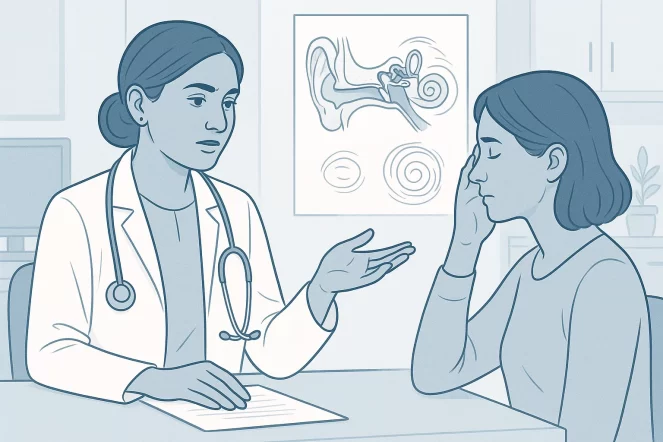
Vertigo is a specific type of dizziness, a false sense of movement caused by a disturbance in the inner ear or balance pathways.
It is a feeling that either you are spinning or the surroundings are moving when everything is actually still.
Vertigo happens when the balance system inside your inner ear (called the vestibular system) sends confusing signals to your brain. Normally, your eyes, inner ear, and sensory input from muscles and joints work together to maintain balance. When one-part misfires, your brain gets confused, and that’s when vertigo or unsteadiness begins.
When Should You Visit an ENT Specialist for Vertigo Diagnosis?
You might wait it out, hoping vertigo will pass. Many do. But you should see an ENT or vertigo specialist for diagnosis, if you notice.
Repeated spinning or swaying sensations triggered by head movements
Symptoms happen when you move your head, lie down, or turn over in bed.
You feel off balance while walking or standing
Sudden falls, repeated imbalance
Muffled Hearing, tinnitus (ringing in ears) along with vertigo.
Nausea, vomiting, or sweating accompany the spinning
Vertigo keeps coming back.
Waiting too long can cause persistent dizziness, so it is advisable to visit an expert sooner than later.
How a Vertigo Specialist Diagnoses Vertigo?
Diagnosing vertigo is a careful evaluation by an expert. Here’s what we typically do it in my vertigo clinic:
Symptom & Clinical History
We begin by asking many questions to understand vertigo or dizziness, such as-
When did the dizziness start
How long do episodes last? Seconds, minutes or hours ?
What triggers turning the head, getting up from bed, standing up
Are there any associated symptoms hearing changes, ringing, ear fullness, nausea, headaches?
Every detail helps in reaching towards diagnosis of vertigo.
Physical Examination & Balance Check
Once we know the details about your vertigo or dizziness, we start with your examination in the clinic.
You’ll be asked to stand with your eyes open and closed, your posture, walking, and coordination will be checked.
We perform specialized positional tests like the Dix-Hallpike test or supine roll test for BPPV.
With these positional tests we can diagnose which canal is affected and which side is affected. This is essential for canal specific repositioning maneuver for BPPV treatment.
We check your ears by video otoscope or endoscope and test eye movement (nystagmus).
Advanced vestibular tests such as VNG, Posturography, VEMP, ECochG, vHIT or fHIT can add in diagnosis of cause of vertigo.
What is a VNG Test?
One of the most important tools for diagnosing vertigo is the VNG (Videonystagmography) test, sometimes called the “eye-test for dizziness”.
Here’s how VNG is done-
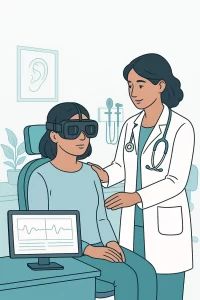
You wear special infrared goggles with small cameras that track your eye movements. While wearing the goggles, you will be asked to do simple tasks such as follow a dot on a screen, change head positions, lie down or sit up.
In one part of the test (the caloric test), warm or cool air is introduced into each ear, which stimulates the inner ear and causes your eyes to move. Caloric test is done to check function of the inner ear.
The test then records how your eyes, inner ear and brain respond.
The VNG test results tell us whether your balance problem is coming from the inner ear (peripheral vertigo) or from the brain/central side (neurological vertigo).
In our Vashi vertigo clinic, the full VNG test takes about 45-60 minutes, it is non-invasive and safe.
(You may feel some dizziness during the VNG test, so arrange someone to drop you off if possible.)
If you’d like to know more about what happens during a VNG test, you can read the detailed guide here -> VNG Test in Vashi, Navi Mumbai
Other Tests
Depending on our clinical judgement we may recommend:
Audiometry (hearing test)
MRI or CT scan (if we suspect neurological causes)
Certain blood tests
Cardiovascular examination
Neurological examination
BP standing/ lying
Touch and pain sensation
This is how an ENT doctor tries to diagnose the cause of vertigo, whether it’s BPPV, vestibular migraine, Menière’s disease, or an inner ear nerve issue.
At my Vashi clinic, I often meet patients who thought their dizziness was “just stress” or “just old age, many of these cases improve once the correct diagnosis is made.
Why Proper Vertigo Diagnosis Matters?
Vertigo can be frightening and the main problem is not knowing what is causing it.
A proper diagnosis also helps prevent problems from getting worse. Some conditions can affect your balance or hearing if ignored. additionally, knowing what’s happening can also reduce anxiety.
Early and accurate diagnosis saves time and effort. You avoid repeated doctor visits or unnecessary medications.
Choosing the Right Vertigo Specialist for Diagnosis
In cities like Navi Mumbai, you have many choices but here are the key things you should look for:
A dedicated ENT & vertigo specialist with experience in balance disorders
On-site VNG and vestibular testing equipment (not outsourced)
Clear explanation of test results and next-step treatment
In my clinic in Vashi, we combine advanced diagnostics (like VNG) and evidence-based treatment.
If you’re dealing with spinning sensations, imbalance, repeated vertigo attacks or unexplained dizziness don’t wait.
A precise diagnosis is your first step to recovery from dizziness.
📞 Call or WhatsApp us at 93222 29159 to book your VNG test or vertigo consultation at our Vashi, Navi Mumbai clinic.
(early diagnosis can make recovery smoother.)
Takeaway
The right diagnostic journey starts with a thorough review, physical exam, and tests like VNG or MRI so that we can find the root cause of vertigo.
At our clinic, patients who come in early often recover faster and feel more confident moving around.
Most vertigo diagnostic tests are simple and comfortable. Tests like the VNG (Videonystagmography) may make you slightly dizzy for a few seconds, but they’re not painful. These tests help doctors understand how your balance system is working.
Vertigo diagnosis starts with a detailed discussion about your symptoms when they happen, how long they last, and what triggers them. Your ENT may then do balance tests, eye movement evaluation, and hearing tests like VNG or audiometry to find the exact cause.
Yes. In most patients, vertigo can be accurately diagnosed with detailed history and office-based balance tests. Scans like MRI are only needed if your ENT suspects a nerve or brain-related cause.
Medicines such as vestibular suppressants, anti-emetics and steroids may be given for relief from severe dizziness and nausea from vestibular neuritis initially, but for long term recovery vestibular rehabilitation exercises are essential.
About Me
Hi, I’m Dr. Archana Jhawar, an ENT specialist with over 24 years of experience. I specialize in tinnitus treatment, vertigo , ear care, and ear surgeries, practicing at Neoalta Clinic, Vashi, and Kokilaben Dhirubhai Ambani Hospital in Navi Mumbai. I’ve trained in vertigo management and Rational Emotive Behavior Therapy (REBT), combining science with compassion to offer holistic, evidence-based care. I’m passionate about writing, poetry, music, yoga, and photography.

 You wear special infrared goggles with small cameras that track your eye movements. While wearing the goggles, you will be asked to do simple tasks such as follow a dot on a screen, change head positions, lie down or sit up.