If you’re feeling dizzy, off balance, or experiencing spinning sensation, you may be looking for answers about vestibular migraine symptoms and treatment.
It is a type of migraine that also affects balance, along with headaches, nausea, and sensitivity to light or sound. It is often an under-recognized cause of dizziness.
In my experience as an ENT specialist, many patients try vertigo medications for months with little relief, only to discover that vestibular migraine is the hidden trigger.
But with proper diagnosis and a tailored treatment plan including lifestyle changes, exercises, and medication, most people can find relief.
In this blog, I’ll explain the common triggers and symptoms, how we diagnose it in my clinic, and effective treatment strategies for vestibular migraine that help most patients.
Table of contents
What is Vestibular Migraine?
Vestibular migraine is a type of migraine where part of your nervous system that controls balance is affected. That’s why people may feel vertigo, dizziness, or a strange sense of motion, sometimes with a headache, and sometimes without.
Why Vestibular Migraine Is Different from Classic Migraine?
Many patients are surprised that vestibular migraine doesn’t always follow the ‘typical’ migraine headache pattern.
Dizziness or imbalance can appear even without a headache. Some describe it as the dizziness or spinning sensation, others as being pulled off balance and for some it may mimic as positional vertigo.
Diagnosis depends on patterns, symptoms and triggers – not just whether a headache is present. Careful tracking of your experiences – what you feel, when it happens, helps your doctor put the pieces together.
Key points to remember:
Involves the balance system (vestibular system) of the nervous system.
Symptoms include vertigo, unsteadiness, or an off -balance motion sensation.
Common Symptoms of Vestibular Migraine
Vestibular migraine symptoms may be different for everyone,. Some patients feel spinning, some feel rocking, or off balance.
Recognizing these symptoms early and sharing them clearly with your ENT specialist or oto-neurologist can make diagnosis faster and relief come sooner.
Now let’s look at the symptoms of vestibular migraine in more detail:
Dizziness or Vertigo Episodes
Patients often describe spinning, swaying, or rocking sensations. Episodes may last minutes to hours and sometimes longer.
Vestibular migraine vertigo often comes without the classic ear symptoms of Ménière’s disease, which helps differentiate it.
You can read more about Minieres disease in my next blog.
Balance Problems and Unsteadiness
Many people feel off-balance or wobbly while walking or standing. Simple activities like walking in a crowded place, climbing stairs, or turning the head quickly can trigger instability.
Migraine-Associated Symptoms
Headache – Classic migraine headache may or may not be present in vestibular migraine patients, but when it is, it may feel pulsating, one-sided, and aggravated by movement or sound.
Sensory sensitivity – Increased light sensitivity (photophobia), sound sensitivity (phonophobia), and nausea often accompany the dizziness due to VM.
Motion Sensitivity – Traveling in a car, scrolling through a phone, watching fast-moving visuals or scrolling screens may worsen dizziness in vestibular migraine.
Visual Disturbances– Some people notice blurred vision, shimmering lights, visual aura or difficulty focusing during episodes.
Ear sensations – Vestibular migraine patients may feel fullness or mild ringing in the ear.
Common Triggers of Vestibular Migraine
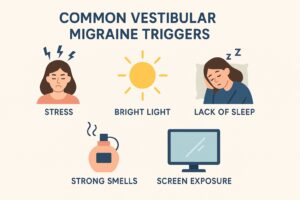
Vestibular migraine can be triggered by a variety of factors. Knowing these triggers can help you prevent dizziness attacks and manage symptoms better. Keeping a simple diary of triggers can help in treatment planning.
Stress or Lack of Sleep
Stress, anxiety, fatigue or lack of sleep can increase the likelihood of vestibular migraine episodes.
Hormonal Changes
For some hormones changes such as during the menstrual cycle, can trigger migraine related dizziness.
Certain Foods
Chocolate, coffee, aged cheese, or heavily processed snacks may be trigger for some personal triggers.
A short food diary is often the best way to spot patterns and avoid the culprit.
Bright Lights or Loud Noises
Bright sunlight, flashing screens, or loud crowded places can tip the balance system into overdrive, worsen dizziness.
Motion Sickness
Car rides, busy traffic, or airplane travel can sometimes trigger dizziness or vertigo in susceptible individuals. Planning ahead and taking preventive steps can reduce episodes.
How is Vestibular Migraine Different from Other Dizzy Conditions?
Vestibular migraine is different from other common dizzy conditions in several ways.
Vestibular Migraine Versus BPPV:
BPPV causes brief spinning vertigo triggered by specific head movements and has a predictable positional trigger. Vestibular migraine episodes are less tied to one position and often last longer.
Ménière’s disease vertigo usually comes with fluctuating, progressive hearing loss and louder tinnitus. Vestibular migraine tends to show migraine features like light or sound sensitivity.
Vestibular Migraine Versus PPPD:
PPPD, or Persistent Postural-Perceptual Dizziness, causes constant dizziness rather than separate dizzy episodes of vestibular migraine (VM). It often starts after previous ear or balance problem. What complicates things is that the vestibular migraine and PPPD can sometimes coexist. That’s why careful evaluation by an ENT vestibular specialist or an oto-neurologist is essential.
H3: Key Takeaway
When symptoms overlap, a detailed history and vestibular clinical tests help your doctor tell these conditions causing dizziness apart.
How Vestibular Migraine is Diagnosed?
There is no single blood test or scan that proves vestibular migraine. Diagnosis is clinical and based on history, pattern of attacks, and ruling out other causes.
Highlights: Vestibular Migraine Diagnosis
Symptom Diary
Clinical Vestibular Tests
Hearing test (Audiometry)
VEMP or EcochG if needed
VNG / Video-nystagmography
Posturography
MRI scans if needed
Here’s a closer look at each of these diagnostic steps and what to expect during evaluation.
Diagnostic Steps of Vestibular Migraine (VM)
Typical steps at my clinic to diagnose vestibular migraine include:
Detailed Symptom History and Diary – Noting down what you feel, how long it lasts, and possible triggers helps your doctor identify vestibular migraine patterns.
ENT and Vestibular Examination Ear examination and vestibular tests to assess balance, coordination, and eye movements.
Hearing Test ( Pure Tone Audiometry) Used to rule out Ménière’s disease or other ear problems.
Advanced Audiological Tests – (cVEMP, OVEMP, EcochG) , if needed to rule out other inner ear causes.
VNG/Video-Nystagmography – Eye movements and nystagmus recording.
Posturography – Selected patients may undergo balance evaluation to quantify unsteadiness.
Imaging (MRI Scan) – only if other neurological conditions are suspected or if the history is atypical.
If the pattern fits vestibular migraine and other causes are unlikely, we begin targeted treatment and monitor response
Which Specialist to Consult?
Both an ENT specialist and a neurologist may work together to confirm the diagnosis of vestibular migraine or to rule out other inner ear or neurological causes of vertigo and dizziness.
There are ENT specialist who are specially trained in dizziness and balance disorders (oto-neuroloigst and vestibular specialist) and can be a good point to start.
Treatment of Vestibular Migraine:
Relief Options
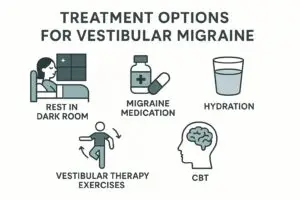
Vestibular migraine treatment combines medicines for acute attack such as Tryptan, preventive drugs (betablockers, ca-channel blockers, certain anti depressants, steady lifestyle habits, vestibular rehabilitation therapy and cognitive behavior therapy (CBT).
Highlight: Vestibular Migraine Treatment
Acute Relief Medicine
Preventive Medicines
Lifestyle and Diet Adjustments
Vestibular Rehabilitation Therapy (VRT)
Cognitive-Behavioral Therapy (CBT/REBT)
Treatment of vestibular migraine usually has three parts: easing symptoms during an attack, preventing future episodes, and retraining balance through therapy.
What helps during an attack?
During acute attack of vestibular migraine the goal is to reduce dizziness, nausea and discomfort.
Rest in a Calm Setting: sit or lie in a quiet, dimly lit room. keep movements to a minimum.
Anti-Nausea Medicines: These prescribed drugs can control nausea or vomiting when symptoms are severe. Migraine-Specific Medicines(like Triptans): Helpful for some during acute vestibular migraine spells.
Short-term Vestibular Suppressants: Occasionally, vestibular suppressants are recommended for severe spinning, but only under medical advice of a neuro-otologist.
Note: please consult your doctor, any medicine should only be started or changed under your doctors guidance.
Prevention of Future Attacks of VM
Prevention of vestibular migraine usually involves a blend of healthy daily habits, preventive medicines, vestibular rehabilitation therapy, and sometimes cognitive-behavioral therapies (CBT or REBT).
ENT’s often advise tailored management approach to reduce the frequency and severity of VM.
Symptom Tracking: A diary of when attacks happen, how long they last, and what preceded them helps tailor treatment
Healthy Lifestyle Habits – Maintaining consistent sleep routine, eating balanced meals on time, staying hydrated, and practicing daily stress-relief habits can lower the risk of attacks.
Diet Related Adjustment: Limit caffeine, chocolate, aged cheese, or foods with strong odors which may trigger episodes for some people. Identifying your personal triggers helps.
Movement and Exercise: Light exercises such as walking, yoga, or vestibular-based exercises can be protective and prevent future attacks
Medicines for Prevention: Depending on your health profile, a doctor may recommend beta-blockers, tricyclic antidepressants, topiramate, flunarizine,
Newer Medicines for Migraine: In select cases, neuro-otologists may consider CGRP antibodies.
Rehabilitation and Therapy
Vestibular rehabilitation therapy (VRT) : It is a structured program of balance and motion exercises and for gradual exposure to desensitize triggers.
With consistent practice, many people notice, dizziness and motion and visual sensitivity improve.
It is important that all exercises are tailormade by a vestibular therapist to ensure safety and effectiveness.
Cognitive-behavioural Therapy (CBT/REBT): In some cases, anxiety and avoidance behaviors causes the dizziness to continue, even after the balance system has started to recover.
Therefore, in these cases cognitive-behavioural therapy (CBT) or Rational Emotive Behaviour therapy (REBT) can be helpful. They teach practical ways to manage fear of dizziness, reduce stress, and improves function.
Simple Daily Steps for Vestibular Migraine You Can Try at Home
These small daily habits can be useful to manage vestibula migraine –
Mind Your triggers – Cut back on things that may spark episodes, like caffeine, alcohol, or heavily processed foods.
Care For Your Eyes: Lower your screen brightness, use blue light filter and take short breaks from digital devices.
Protect Your Ears – Avoid loud environments or use ear protection when needed.
Light Exercise and Daily movement– Go for a short walk, try light stretches, or do home balance exercises at home.
Relaxation Routine – Deep breathing, mindfulness, or a few minutes of quiet rest can calm your nervous system.
Journal or Diary : Keep a short personal record of time of attack, duration, and possible migraine triggers to help identify patterns and better manage your vestibular migraine.
Note: These home care tips are not a replacement for medical treatment of vestibular migraine, but when combined with professional advice, they give better dizziness control and confidence in daily life.
When to See an ENT, Neuro-Otologist, or Neurologist Urgently?
Seek immediate attention if you experience any of these red-flag symptoms : • New severe neurological symptoms: Weakness, double vision, or difficulty speaking. • Sudden significant hearing loss. • First-ever severe, sudden, or progressive dizziness without a clear cause. • Recurrent attacks that prevent basic daily activities despite home measures.
Living With Vestibular Migraine
Most patients of vestibular migraine respond well to a combination strategy of trigger control, preventive medications when needed, vestibular rehabilitation and sometimes, CBT.
With these strategies, the goal is fewer attacks, less severe dizziness, and improve day-to-day balance.
Why Vertigo Can Keep Coming Back in Vestibular Migraine?
Vestibular migraine is episodic means it often comes and goes.
Even with treatment, dizziness episodes can return because the part of your nervous system that controls balance is sensitive to triggers, things like stress, hormonal changes, missed sleep, certain foods, or even motion around you.
Stay tuned to read my new blog- why does vertigo keep coming back?
Long Time Outlook – Living With Vestibular Migraine
Over time, and with tailored care from an ENT or neuro-otologist, most people gradually regain confidence, reduce dizziness, and return to normal daily activities.
Paying attention to what triggers your vestibular migraine dizzy spells and keeping up with preventive steps can help you feel more in control and confident in daily life.
Early diagnosis and treatment of vestibular migraine often leads to the best outcomes.
FAQ About Vestibular Migraine Symptoms, Diagnosis and Treatmtent
Start with an ENT specialist or oto0neurologist. They can refer to neurologist and can work together together to diagnose and treat vestibular migraine.
Yes, children can experience dizziness or balance issues with migraines. Early evaluation by a pediatric ENT or vertigo specialist helps prevent prolonged discomfort
Common symptoms of vestibular migraine are dizziness, rocking, or off-balance sensations, nausea, light or sound sensitivity, and sometimes mild headaches
Diagnosis is based on history, attack patterns, symptom diary, and ruling out other causes. Tests like audiometry, VNG, or MRI may help but there is no single scan or test to confirm the diagnosis.
Rest in a calm environment, anti-nausea medications, migraine-specific drugs (triptans), and short-term vestibular suppressants under medical supervision.
Maintain regular sleep, eat balanced meals, stay hydrated, track triggers, do light vestibular exercises, and follow preventive medicines as advised by your doctor.
Dr. Archana Jhawar provides evaluation and treatment for vestibular migraine at Neoalta ENT & vertigo Clinic, Vashi and Kokilaben Dhirubhai Ambani Hospital, Koparkhairane, for both adults and children.
About Me
Hi, I’m Dr. Archana Jhawar, an ENT specialist with over 24 years of experience. I specialize in tinnitus treatment, vertigo , ear care, and ear surgeries, practicing at Neoalta Clinic, Vashi, and Kokilaben Dhirubhai Ambani Hospital in Navi Mumbai. I’ve trained in vertigo management and Rational Emotive Behavior Therapy (REBT), combining science with compassion to offer holistic, evidence-based care. I’m passionate about writing, poetry, music, yoga, and photography.

 Vestibular migraine can be triggered by a variety of factors. Knowing these triggers can help you prevent dizziness attacks and manage symptoms better. Keeping a simple diary of triggers can help in treatment planning.