BPPV vs Vestibular Migraine: Understanding the Difference
Vestibular Migraine (VM) and Benign Paroxysmal Positional Vertigo (BPPV) are two of the most common causes of dizziness. They differ in symptoms, duration, triggers and treatment.
If someone is being treated for BPPV and has undergone the Epley’s maneuver several times without any relief, it may not be BPPV at all. Vestibular migraine can sometimes mimic positional vertigo.
What Is Vestibular Migraine?
Vestibular migraineis a neurological condition, where dizziness or vertigo is the main symptom. It may happen with or without head pain.
In this condition the brain’s balance system becomes overly sensitive, triggering dizziness episodes (dizzy spells) or vertigo , lasts longer. It can be triggered by stress, hormonal changes, lack of sleep etc.
Tiny calcium carbonate crystals (otoconia) move into the wrong part of the balance system (the semicircular balance canals), causing brief, intense episodes of spinning vertigo when you change head positions.
Symptoms: Vestibular Migraine vs BPPV
BPPV is brief episode of intense positional vertigo, while vestibular migraine episodes lasts longer with other migraine symptoms.
Common Symptoms of Vestibular Migraine
Sudden spinning or floating sensation
Light sensitivity, sound sensitivity,
Motion sickness or intolerance to screens
Feeling off-balance
Lasts minutes to hours, not just seconds
May or may not have a headache
History of migraine, anxiety, or family history
Common Symptoms of BPPV
Sudden spinning when lying down or rolling in bed or sudden head turns
Episodes last seconds to 1–2 minutes
Triggered by movement (e.g., turning in bed, bending down)
No headache, no light or sound sensitivity
Treatable with Epley maneuver
Causes / Risk Factors for Vestibular Migraine vs BPPV
Vestibular Migraine and BPPV have different underlying causes, one starts in the brain’s migraine pathways, the other in the inner ear’s balance organs.
Risk factors: BPPV is more common in older adults, while vestibular migraine often affects younger women. Stress, poor sleep and hormonal shifts can trigger both.
Vestibular Migraine vs BPPV which is it? Key Differences Between BPPV and VM
Here’s a quick comparison-Vestibular Migraine vs BPPV:
Feature
Vestibular Migraine
BPPV
Cause
Brain sensitivity (migraine pathways)
Inner ear crystal (otoconia) movement
Duration of dizziness
Minutes to hours
Seconds
Trigger
Stress, hormones, food, lights, smells, travel
Head movements, change in position
Associated symptoms
Headache, sensitivity to light/sound, nausea, imbalance
Spinning only, no migraine symptoms
Nystagmus
Not consistent, may not match a specific semicircular canal
Matches a specific semicircular canal (typical positional nystagmus)
In short- BPPV is short-lasting spinning vertigo triggered by head movements, while vestibular migraine is longer-lasting dizziness with migraine symptoms.
How ENT Specialists Diagnose If It Is BPPV or VM or Both?
Diagnosis usually starts with a detailed patient history and clinical examination.
ENT specialists may perform positional tests like Dix-Hallpike or Roll tests to confirm BPPV; vestibular migraine is diagnosed clinically, based on migraine-related triggers, symptoms and history.
If a patient with vertigo or dizziness visits my vertigo clinic, this is how I diagnose whether it is BPPV or Vestibular migraine.
Checking for Symptoms:
Is it spontaneous (VM, Minieres, Vascular) or there is some trigger (Positional – BPPV)?
How long does it last? Seconds to minutes -BPPV Minutes to hours to days -VM or MD
Is there hearing loss – Minieres, hearing is not affected -VM, BPPV
Are there migraine related symptoms –Photophobia, sensitivity to sound, smell, touch, headache, motion sickness-VM
Step-by-Step Vestibular Assessment:
Supine Roll Test – Positional test for lateral canal BPPV
Dix-Hallpike test – Positional test for posterior canal BPPV
BPPV can be diagnosed or ruled out within minutes. Vestibular migraine needs a deeper symptoms tracing.
This process helps us to make a clear BPPV or vestibular migraine diagnosis so patients can start the right treatment.
Different Treatment Plan for BPPV vs Vestibular Migraine
Understanding the difference between VM and BPPV is the first step to getting the right treatment. BPPV treatment involves repositioning maneuvers like Epley, while vestibular migraine management focuses on trigger avoidance, lifestyle changes, and migraine medications.
Anti Migraine Medications: Flunarizine, Amitryptiline, Propranolol, etc.
CBT for those with anxiety overlay
Discover vestibular migraine triggers and relief options here.
Prognosis and Recurrence VM vs BPPV
BPPV often resolves quickly with treatment but can recur; vestibular migraine needs long-term management and life style modifications.
Can You Have Both BPPV and Vestibular Migraine together?
Yes, it is possible to experience both BPPV and vestibular migraine together, a condition where dizziness may persist or recur despite standard BPPV treatment by repositioning maneuver.
Treatment of migraine is crucial for long-term relief and successful treatment of dizziness in such cases.
BPPV and vestibular migraine can overlap and a careful evaluation by an ENT or a vestibular specialist is essential.
Why Migraine Treatment Helps When BPPV Keeps Coming Back?
Even after Epley maneuvers for BPPV, some patients experience recurrent dizziness, which could be due to coexisting vestibular migraine. Studies suggest that Migraine treatment including lifestyle modification, migraine prophylaxis medications, or trigger control can significantly reduce dizziness episodes .
Tips to Manage Dizziness from BPPV and Vestibular Migraine.
These steps can help patients dealing with coexisting BPPV and vestibular migraine.
Consult your ENT or neuro-otologist for vestibular migraine and BPPV management.
Get canal specific crystal repositioning maneuver for BPPV treatment.
Keep a diary about your dizziness, headaches, and triggers.
Manage triggers- such as stress, poor-sleep, or certain foods.
Stay well hydrated.
When Do You Need the ENT Specialist for BPPV and Vestibular Migraine?
You should visit an ENT specialist as when you experience dizziness or vertigo. People usually visit when-
Months of trying Betahisitne or cinnarizine with no relief
Being told it’s in your head Normal MRI but daily dizziness persisting
Vertigo not resolving even after Epley’s
With a structured step wise assessment, we can differentiate between BPPV and vestibular migraine. ENT consultation ensures accurate diagnosis and a treatment for both BPPV and vestibular migraine.
Dr. Archana Jhawar is a vertigo specialist at Neoalta Clinic, Vashi, Navi Mumbai with 25 years of experience in diagnosing and treating BPPV, vestibular migraine and complex dizziness disorders.
Patients from Vashi, Sanpada, Nerul, Kharghar, Belapur, Koparkhairane Ghansoli and Panvel visit for complete vestibular evaluation including VNG testing and BPPV repositioning maneuver. Call 9322229159.
Yes. Stress is a well-known trigger for vestibular migraine. While stress does not directly cause BPPV, it can worsen dizziness symptoms and delay recovery.
Managing stress through sleep, hydration and lifestyle changes benefits both conditions.
No. MRI is usually normal in both BPPV and vestibular migraine. Diagnosis is clinical based on symptom history, positional tests and vestibular assessment. VNG testing may be recommended when the diagnosis is unclear.
BPPV is treated with crystal repositioning maneuvers like the Epley, Semont, or Lampert-Barbeque maneuver while vestibular migraine treatment is usually trigger- control, lifestyle modification, and migraine-medication.
The treatments are completely different, which is why accurate diagnosis matters.
Dr. Archana Jhawar ENT specialist and Certified Vestibular Specialist offers vestibular assessment & treatment at Neoalta Clinic, Sector 17 Vashi.
She performs Dix-Hallpike, Roll test, VNG testing and BPPV repositioning maneuvers. Patients from Vashi, Nerul, Kharghar, Belapur, Koparkhairane and Panvel consult her for BPPV and vestibular migraine diagnosis. Call 9322229159.
About Me
Hi, I’m Dr. Archana Jhawar, an ENT & Vertigo specialist with 25 years of experience. I specialize in tinnitus, vertigo, ear, nose and throat care, and ENT surgeries. I practice at Neoalta Clinic, Vashi, and Kokilaben Dhirubhai Ambani Hospital in Navi Mumbai.
I have advanced training in vertigo management and REBT(CBT), combining evidence-based care with a compassionate approach. Beyond medicine, I enjoy reading, writing, music, yoga, and photography.



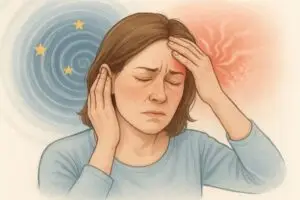 Yes, it is possible to experience both BPPV and vestibular migraine together, a condition where dizziness may persist or recur despite standard BPPV treatment by repositioning maneuver.