
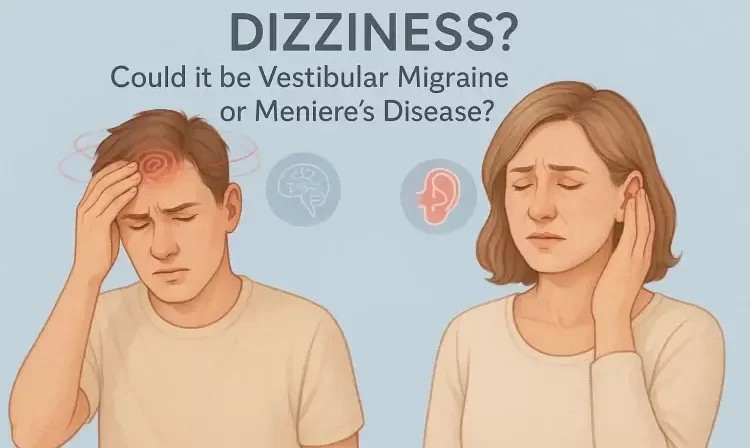
Patients often come to me with dizziness, not knowing whether it’s Vestibular Migraine or Meniere’s Disease. Some arrive convinced they have Ménière’s disease related vertigo, only to discover their symptoms point toward vestibular migraine or the other way around.
The overlap between these two conditions is so close that people spend months in uncertainty. Yet, despite the similarities, VM and MD have very different underlying causes, symptoms, and treatment approaches.
You can read my blog about causes & treatment of vertigo.
Vestibular migraine & Ménière’s disease both cause recurrent vertigo or dizziness attacks, and can have ear symptoms such as fullness and tinnitus making them easy to mistake for one another.
It is also possible for the same patient to experience more than one balance disorder at the same time. For example, some people may have both Vestibular Migraine and Meniere’s disease. The symptoms can overlap, making the diagnosis a little more challenging.
That’s why a careful evaluation by an ENT & vertigo specialist, often with advanced vestibular tests like VNG, is important to separate which symptoms belong to migraine and which to Meniere’s, and then plan the right treatment for you.
For a detailed guide on vestibular migraine, see Vestibular Migraine: Symptoms & Treatment
Learn more about Ménière’s disease here Ménière’s Disease Symptoms & Treatment
Ménière’s vertigo often shows up with ear symptoms like fullness, ringing, and fluctuating hearing loss, while vestibular migraine tends to carry the imprint of migraine triggers and sensitivity to light or sound.
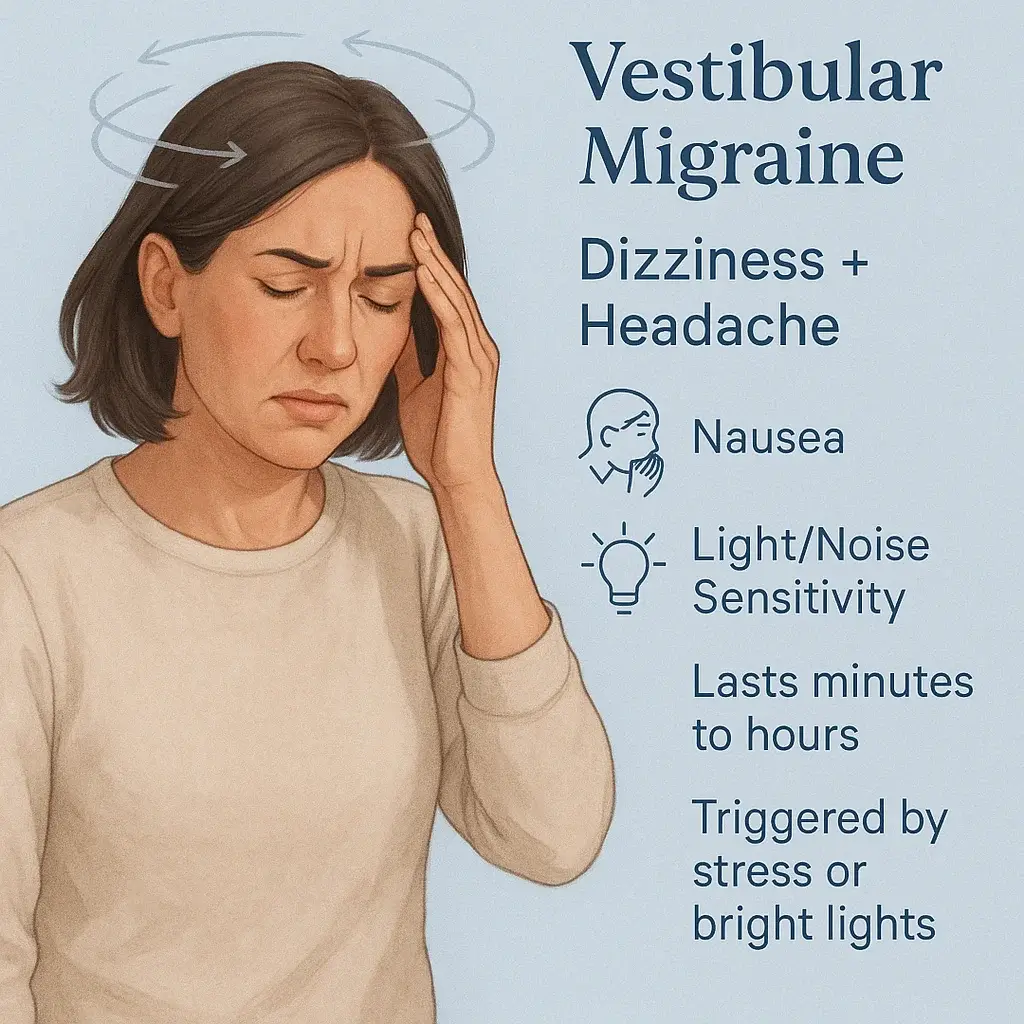 Vestibular migraine (VM) is a type of migraine where dizziness or vertigo is the main symptom, sometimes even without a headache. Symptoms include –
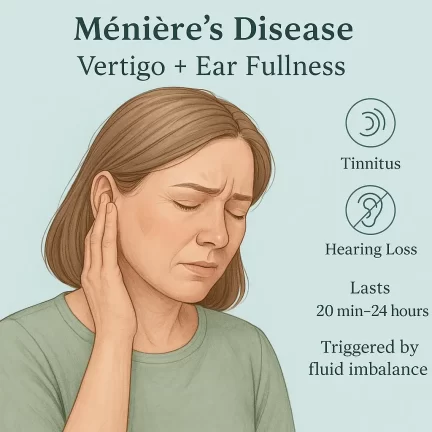
Though often symptoms can be similar to other conditions causing episodic vertigo, Ménière’s dizziness has certain features that help ENT specialists tell them apart.
Vestibular Migraine -> episodic dizziness or unsteadiness, sometimes positional vertigo, triggered by light, noise or motion sensitivity. headache may or may not present.
Ménière’s Disease -> attacks of spinning vertigo, hearing loss which fluctuates, tinnitus, ear pressure
Unlike inner ear-related causes of vertigo, vestibular migraine is because of hypersensitivity of the brain’s motion and sensory signals.
Ménière’s disease is an inner ear disorder caused possibly by fluid build-up (endolymphatic hydrops) in the inner ear affecting balance and hearing.
While fluid imbalance is the most widely accepted explanation, the exact cause of Ménière’s disease is still not fully understood.
Vestibular Migraine -> VM episodes usually triggered by stress, poor sleep, hormonal changes, or certain foods.
Ménière’s Disease -> MD triggers are excess salt intake, fluid retention, allergies or autoimmune issues.
Overlap –> both vestibular migraine and Ménière’s disease can worsen with stress, poor sleep, weather changes, or fatigue making them confusing to patients.
Here’s how an ENT specialist diagnoses if your dizziness or vertigo is Vestibular Migraine (VM) vs Meniere’s Disease (MD):
To diagnose Meniere’s or vestibular migraine, ENT specialist usually starts with a detailed clinical history and symptom pattern. This step helps distinguish between brain-related vertigo (VM) and inner-ear causes (MD).
Doctor will Ask about frequency of vertigo attacks, triggers, how long it lasts and associated symptoms (headache, ear fullness, tinnitus).
Doctor will Look for migraine patterns such as sensitivity to light, sound, motion, or food triggers.
He will Note changes in hearing or pressure in the ear more suggestive of Ménière’s disease.
Video Nystagmography (VNG) helps differentiate inner ear causes vs migraine-related dizziness.
Vestibular Evoked Myogenic Potentials (VEMP) can identify Ménière’s-related inner ear imbalance.
To look for changes in hearing loss over time, it is essential for Ménière’s diagnosis.
MRI scans to rule out rare central causes of vertigo such as tumor or stroke.
Red flags to watch for – Sudden severe vertigo, hearing loss, or neurological symptoms to help understand when to see an ENT urgently.
Many patients struggle to tell whether their vertigo comes from vestibular migraine or Ménière’s disease. While the symptoms table above provides general differences, a proper evaluation by ENT specialist is key.
Doctors Diagnose VM is by clinical evaluation, based on patient’s symptom patterns. ENT check-up rules out ear-related causes of dizziness and vertigo.
Sometimes vestibular tests like VNG help confirm the diagnosis.
For a detailed guide on vestibular migraine, see Vestibular Migraine: Symptoms & Treatment.
To diagnose Ménière’s disease, ENT specialist will evaluate your symptoms, check series of hearing tests (Audiometry) results over time and vestibular tests like VNG or VEMP.
He may occasionally recommend MRI scans to rule out other causes of vertigo and dizziness.
Learn more about Ménière’s disease here Ménière’s Symptoms & Treatment
Tip for patients: Keep a diary of your vertigo attacks such as how long it lasts, what possibly triggered it and other symptoms. This can help your ENT pinpoint the cause and help in differentiating VM and MD.
Vestibular Migraine Treatment
Ménière’s Disease Treatment
Once a diagnosis of vestibular migraine or Ménière’s disease is clear, the treatment is different for both. Following are treatment options to relieve symptoms and reduces future attacks of dizziness.
Treatment of vestibular migraine is a combination of diet and lifestyle changes, medications to manage symptoms and prevent migraine attacks, and vestibular rehabilitation exercises to improve balance.
Lifestyle & Trigger Management: Sleep, hydration, stress control, avoiding trigger foods.
Track your vertigo symptoms in a diary or app.
Medications: Migraine prophylaxis or medication for acute vestibular migraine attacks, when necessary.
Vestibular Rehabilitation Therapy (VRT): Exercises to reduce imbalance and motion sensitivity. learn more about Vestibular Rehabilitation Therapy.
CBT & Stress Management: For patients with persistent dizziness or anxiety related to vertigo. Learn more about CBT for PPPD and dizziness
Focus of Ménière’s disease treatment is to manage symptoms through medications like diuretics, a low salt diet, vestibular rehabilitation therapy and occasionally surgery for severe cases.
Diet & Lifestyle: Low-salt diet, reduce caffeine/alcohol,
Medications: Diuretics, vestibular suppressants during acute attacks.
Vestibular Rehabilitation Therapy: VRT Improves brains natural compensation for balance and reduces dizziness.
Invasive treatment Options (for severe cases not responding to treatment): Intratympanic steroid injections or surgery for Ménière’s disease. You should discuss risk and benefit of these with your ENT specialist.
Balance exercises at home like standing on one leg or walking heel-to-toe and sleep management to reduce attack frequency.
Patient education: understanding your dizziness condition reduces fear and improves recovery.
If you’re unsure whether your vertigo comes from vestibular migraine or Ménière’s, early consultation is crucial.
Early diagnosis = better outcome.
Related Blogs & Resources
Understanding the subtle but important differences between vestibular migraine and Ménière’s disease can save months of uncertainty.
These are some points to help you spot the signs and know when to seek expert ENT care
| Feature | Vestibular Migraine | Ménière’s Disease |
|---|---|---|
| Duration of vertigo attacks | Minutes to a few hours, sometimes accompanied by headache | Usually 20 minutes to several hours, intense spinning |
| Ear fullness or pressure | Rare or mild | Common, often fluctuates |
| Hearing loss | Usually normal | Fluctuating hearing loss is typical |
| Tinnitus (ringing in ear) | Sometimes, often mild | Persistent and noticeable during attacks. Sometimes loud sound in the ear before dizziness |
| Triggers | Stress, hormonal changes, certain foods, sleep deprivation | Salt intake, stress, weather changes |
| Associated symptoms | Migraine headache, light or sound sensitivity, nausea | Tinnitus, ear fullness, imbalance |
| Best way to confirm | Detailed history, clinical evaluation, ruling out ear disease | ENT exam, audiometry, vestibular tests like VNG |
While this table helps you understand general patterns, remember every patient is unique. Symptoms may overlap, and self-diagnosis can delay effective treatment. Consulting a vertigo specialist especially someone experienced in both vestibular migraine and Ménière’s disease is the safest way to get a clear diagnosis and start the right treatment.
Vestibular migraine and Ménière’s disease both causes dizziness, but vestibular migraine is often linked to migraine triggers, light/sound sensitivity and sometimes migraine headache whereas Ménière’s disease usually causes ear fullness, tinnitus, and fluctuating hearing loss.
A thorough assessment by an ENT specialist and tests like VNG, is the best way to have clarity.
Yes, some patients may have overlapping symptoms of both VM and MD. . Thorough assessment and a detailed symptom history are essential.
These audiological and vestibular tests combined with clinical history, help your ENT differentiate the vestibular migraine and Meniere’s disease.
Yes. Vestibular rehabilitation therapy improves balance and reduces dizziness episodes of VM, MD and other vertigo causing conditions.
Differentiating between Ménière’s disease, and vestibular migraine is important for proper treatment of dizziness. Each condition has unique symptoms and treatment approaches.
Early evaluation by an ENT specialist can prevent recurrent vertigo and improve quality of life.
At our Vashi vertigo clinic, we provide advanced vestibular tests like VNG and personalized treatment plans for dizziness.

Hi, I’m Dr. Archana Jhawar, an ENT specialist with over 24 years of experience. I specialize in tinnitus treatment, vertigo , ear care, and ear surgeries, practicing at Neoalta Clinic, Vashi, and Kokilaben Dhirubhai Ambani Hospital in Navi Mumbai. I’ve trained in vertigo management and Rational Emotive Behavior Therapy (REBT), combining science with compassion to offer holistic, evidence-based care. I’m passionate about writing, poetry, music, yoga, and photography.
Home Sleep Study or Hospital Lab: Choosing the Right Test
Snoring, Gasping, or Fatigue: Is it Nasal Allergy or Sleep Apnea?
Nasal Allergy and Sleep Problems: Why You Feel Tired All Day
When Nasal Blockage Needs Surgery – And When It Doesn’t
Daily Allergy Triggers: Dust, AC, Pets, Pollen and What to Do