
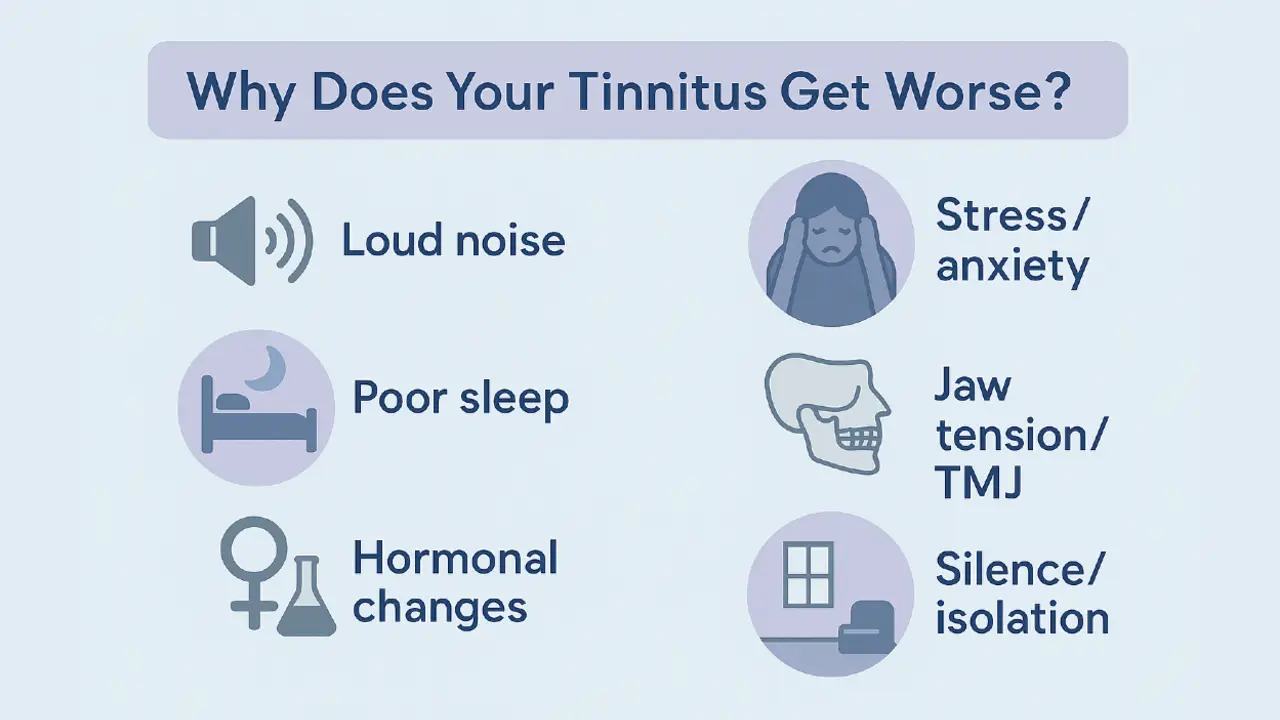
In a survey of 258 patients, things that made tinnitus better included background noise (31%) and relaxation (15%). Factors that made it worse included being in a quiet place (48%), stress (36%), noisy environments (32%), and lack of sleep (27%). About 6% of patients reported that coffee or tea worsened their tinnitus, while 4% pointed to certain foods. Reference Pan, Tao et al. “Differences Among Patients That Make Their Tinnitus Worse or Better.” American journal of audiology 2015 Dec;24
Here are top tinnitus triggers-
1.Loud Noise Exposure(Even Briefly)

Whether it’s traffic-noise, concerts, machinery, gunshot sound or earphones – even short bursts of loud sound can irritate the auditory nerve and worsen the ringing.
You can use high-fidelity earplugs or noise-filtering headphones to reduce sound sensitivity without muting life.
2. Stress and Anxiety
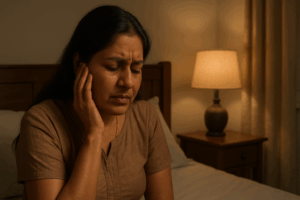
Mental stress & anxiety directly affects your perception of tinnitus. The more anxious you feel or more you focus on the sound, the more noticeable the sound becomes, a frustrating feedback loop. We normally call this tinnitus trap. You can stay tuned to read my post about how anxiety increases tinnitus.
Our nervous system is tightly linked to how we perceive sound. The more frazzled your nerves, the louder your tinnitus may seem. This is where soothing routines matter.
Consider starting with a guided breathing app or daily 10-min meditation using tools like Calm. If you prefer offline comfort, a lavender-scented weighted eye mask can aid in easing nighttime anxiety.
Gentle tip: Mindfulness apps and calming soundscapes can help soothe this loop.
3. Lack of Sleep
Sleep deprivation weakens your brain’s ability to filter unwanted sounds. Tinnitus often feels louder after poor sleep.
Sleep Routine Matters
Did you know your pre-sleep routine affects how loud your tinnitus feels at night?
Avoid screens 30 minutes before bed, dim the lights, and play soft pink noise through a tinnitus sleep machine. Many of my patients say it helps them drift off faster and wake up less disturbed.
A warm foot soak or magnesium-rich diet can also support deeper sleep. You might also consider Magnicium glycinate & melatonin supplements but only after consulting your doctor.
Try using tinnitus-friendly sleep earbuds or white noise generators to relax your nights.
Try using eye mask for better sleep, keep room temperature cold.
4. Caffeine, Nicotine, and Alcohol
These substances may constrict blood vessels and stimulate your nervous system, which in turn may spike tinnitus temporarily in some people. Notice what your body says when you consume them.
5. Certain Medications
Some common medicines (like aspirin, antibiotics, or diuretics) can act as ototoxic triggers, especially in high doses. Always consult your doctor if symptoms worsen after starting new medication.
Hidden Triggers You Might Not Have Noticed
Jaw Clenching or TMJ Issues
Grinding your teeth, clenching during sleep, or jaw alignment issues can increase tinnitus due to their close connection with your ear anatomy.
Hormonal Changes
Especially during perimenopause or thyroid imbalance, hormonal shifts can subtly increase ear ringing. Women often notice spikes during their cycle.
Many women I see in my clinic report worsening tinnitus around their periods, during perimenopause, or after childbirth. Hormonal fluctuations can alter inner ear pressure, blood flow, and stress responses. If you’re navigating these phases, know that your care needs to be individualized and you’re not imagining your symptoms
Sudden Silence or Isolation
In a completely quiet environment, tinnitus often feels louder. You’re not imagining it. That’s why sound therapy and gentle background sounds are so helpful.
What Should You Do If Your Tinnitus Gets Worse Suddenly?
Sometimes, a temporary spike in tinnitus can be triggered by a stressful day, loud sound, or poor sleep. These tinnitus spikes usually settle within hours to a few days.
Don’t panic. Often, tinnitus getting worse suddenly is a temporary spike.
But if it continues, worsens, or is accompanied by hearing loss or vertigo, please consult an ENT specialist near you. Early help can make a huge difference.
I always tell my patients with tinnitus, it’s not about fighting the sound, it’s about softening your reaction to it. That’s where therapies like TRT and CBT works. You can train your brain to stop reacting to tinnitus and start healing. If you’re based in Navi Mumbai or anywhere in India, you can book an in-clinic or virtual consultation with me.
You can also explore Tinnitus Retraining Therapy (TRT)or CBT/ REBT-based Tinnitus Therapy.
Gently Supporting Yourself: You’re Not Alone
Tinnitus can feel isolating, it is frustrating and anxiety provoking but with the right guidance, supportive tools, and certain lifestyle shifts, you can reduce its impact on your mental health and reclaim your peace.
Personalized tinnitus therapy, like CBT, TRT, and lifestyle coaching, can make a lasting difference.
Read about Types of tinnitus and Causes of Tinnitus in my old post.
Read a complete ENT-approved guide on tinnitus causes, diagnosis, relief options, and more.