
If tinnitus has left you searching for answers, explore this complete guide to understanding Tinnitus, Causes, Diagnosis, Relief & Treatment options.
That ringing in your ears when the room falls silent…That’s tinnitus, a condition where you hear a sound that’s not coming from the outside world.
As an ENT specialist, I meet many patients who feel scared, confused, or helpless. Many tell me they haven’t received clear answers about why tinnitus happens or what can actually help. Some are simply told, ‘You’ll have to live with it.
But here’s the truth…Tinnitus is hard for you…but help exists.
TL;DR
Tinnitus is the perception of sound when there is no external source. A sound only you can hear.
It’s not a disease, but a symptom of something affecting your hearing system or brain’s sound processesing.
Every patient describes it differently. You might hear:
The sound can be soft or loud, constant or intermittent, and may affect one or both ears.
Tinnitus isn’t just one type. These types help doctors understand what kind of sound you’re hearing.
Subjective Tinnitus:
This is the most common form. A sound only you can hear, often due to hearing loss or nerve damage.
Objective Tinnitus:
A rare type where the sound can sometimes be heard by your ENT using a stethoscope. It’s usually caused by a physical source like a vascular issue.
Pulsatile Tinnitus:
A rhythmic tinnitus that matches your heartbeat. It may be due to blood flow or increased pressure in vessels near the ear.
Somatic Tinnitus:
Triggered or worsened by movement of the neck, jaw, or head. Often seen in patients with TMJ or cervical spine issues.
Central (Neurological) Tinnitus:
Related to conditions like Meniere’s disease or multiple sclerosis. It’s caused by nerve-related changes in auditory processing.
Learn about the types of tinnitus.
Tinnitus has many possible causes, and sometimes more than one may be present.
Age-related hearing loss
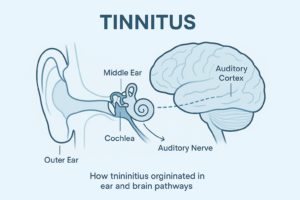
Loud noise exposure
Ear infections or wax blockage
Meniere’s disease
TMJ disorders
Neck and jaw issues
Certain medications (ototoxic drugs)
Stress and anxiety
Eustachian tube dysfunction
Rare tumors or vascular issues
Wondering why your ears are ringing? Read this blog on causes of tinnitus.
Read my blog Triggers of Tinnitus
To find the root cause of your tinnitus, your ENT may recommend a series of simple, painless evaluations and tests. These help rule out serious issues and guide your treatment plan.
ENT & audiologist evaluation typically includes:
Most cases of tinnitus cannot be completely cured, but they can often be managed successfully.
In some people, tinnitus improves after treating conditions such as ear wax, an ear infection, or certain medications.
If tinnitus is linked to hearing loss or changes in the way the brain processes sound, the focus is from curing it to helping you notice it less. Treatments such as sound therapy, CBT, TRT, and hearing aids can be very effective in reducing the distress it causes.
The goal of treatment is to reduce the impact tinnitus has on your daily life, so you can sleep better, concentrate more easily, and feel less bothered by the sound.
Learn more in this blog Is There a Permanent Cure for Tinnitus?
Tinnitus might feel overpowering, but there are proven treatment paths that help in habituation and bring some relief.

Here are the ENT and audiologist- reviewed, science-backed therapies that many of my patients have benefited from:
Sound therapy uses gentle background noises, to help your brain tune out the ringing.
White noise machines, nature sounds, or soft music can mask your tinnitus.
CBT teaches you practical steps to change unhelpful thoughts about tinnitus and reduce the stress it causes. It helps your brain react differently to the sound rather than trying to eliminate it.
TRT combines sound therapy with counselling to help your brain gradually pay less attention to tinnitus over time.
If you have hearing loss, properly fitted hearing aids can amplify everyday sounds, making internal ringing less noticeable.
There is no medicine that cures tinnitus. However, medications may sometimes be prescribed to help manage anxiety, depression, or sleep problems associated with tinnitus.
Supplements such as magnesium glycinate or ginkgo biloba are sometimes used, but the scientific evidence is limited.
The evidence for ginkgo biloba is mixed, and I personally do not recommend it.
Smart, science-backed tinnitus relief tools for home use.
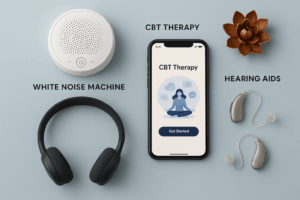
Simple Bed sides machine used at night that crates a consistent sound to help you sleep.
Soft nature sounds like ocean waves, rainfall, fan sound, gentle ambient music can help distract the brain from the ringing. These can be played via noise machine, sleep headphones or tinnitus apps especially before bed time for better sleep.
Different sounds work for different people, so you may need to try a few before finding what suits you best.
Small devices that fit inside he ear canal or behind the ear, These emit soft sound to mask tinnitus.
Smartphone apps that guide you through relaxation techniques and help reframe your brain’s response to tinnitus.
Comfortable padded headphone deliver soothing sound directly to your ears without disturbing your partner.

Avoid silence
Total quiet can make tinnitus feel louder, keeping soft background sound helps your brain stay focused elsewhere.
Sleep routine and hygiene
A regular bedtime routine and cool, dark room can help your nervous system relax and lessen nighttime tinnitus spikes.
Stress management
Simple breathing, meditation exercises, yoga, mindfulness or counseling can calm your mind and reduce the emotional impact of tinnitus.
Diet & life style
Some people notice that caffeine, alcohol, or sugary foods make their tinnitus worse. If you notice a pattern, try reducing them.
ENT-approved Ear Care only
Follow your ENT’s advice on safe ear cleaning and avoid unverified at‑home treatments or tools that could worsen symptoms.
Looking for a complete daily plan for tinnitus relief?
Follow this ENT-guided mind-body routine for tinnitus relief that blends science with self-care.
At our ENT led Tinnitus & Hyperacusis Clinic in Navi Mumbai, we offer a team approach.
ENT Specialist – video otoscopy, diagnosis & medical/surgical care
Audiologist – Hearing and tinnitus assessments, hearing aids & sound therapy
Tinnitus CBT /TRT Therapist – CBT and TRT based globally recognized programs for stress relief & brain retraining
Vestibular Specialist – For tinnitus with dizziness or balance issues.
If your tinnitus is sudden, one-sided, or comes with dizziness, seek ENT help immediately.
Click to Book a Tinnitus consultation on WhatsApp.
A complete ENT evaluation and hearing test (audiometry) are usually the first steps for tinnitus patients. They help identify possible causes and guide the most appropriate treatment.
No. There is no medicine that cures tinnitus. However, treatments such as sound therapy, CBT, TRT, and hearing aids can help many people manage it successfully.
Yes. If tinnitus is associated with hearing loss, hearing aids can make external sounds clearer and reduce the perception of tinnitus.
There is no instant cure. Many people experience relief with background sound, relaxation techniques, and the right treatment plan recommended by an ENT specialist.
No, tinnitus is usually not dangerous. It is a symptom, not a disease, and is often linked to hearing loss, ear wax, noise exposure, or stress.
However, it needs prompt ENT evaluation if it is sudden, occurs in one ear only, or is accompanied by hearing loss, dizziness, or ear pain, as these can indicate an underlying condition requiring treatment.
Still have questions about your tinnitus? Book a consultation with Dr. Archana Jhawar for a personalised evaluation.
Hi, I’m Dr. Archana Jhawar, an ENT specialist with over 24 years of experience. I specialize in tinnitus treatment, vertigo , ear care, and ear surgeries, practicing at Neoalta Clinic, Vashi, and Kokilaben Dhirubhai Ambani Hospital in Navi Mumbai. I’ve trained in vertigo management and Rational Emotive Behavior Therapy (REBT), combining science with compassion to offer holistic, evidence-based care. I’m passionate about writing, poetry, music, yoga, and photography.
Sinus Headache vs Migraine: How to Tell the Difference
Home Sleep Study vs Lab Sleep Study: Which One Do You Really Need?
Snoring, Gasping, or Fatigue: Is it Nasal Allergy or Sleep Apnea?
Nasal Allergy and Sleep Problems: Why You Feel Tired All Day