

That ringing, buzzing, or humming sound in your ears can disturb sleep, focus and peace of mind. If you’ve tried to ignore it but the sound keeps drawing your attention back, you’re not alone.
The good news is that tinnitus relief is possible. While there isn’t a quick fix, there are practical, evidence-based techniques you can start using today to make tinnitus less noticeable and easier to live with.
In this guide, I’ll share simple, ENT-approved at-home tinnitus relief techniques that many of my patients have found helpful.
I’m Dr. Archana Jhawar, ENT specialist in Navi Mumbai.
TL;DR: Simple measures like using background sound correctly, managing sudden tinnitus spikes, and choosing the right relief technique can make a real difference in lowering tinnitus distress.
There isn’t one tinnitus relief technique that works for everyone.
The best approach depends on the type of tinnitus, whether you have hearing loss, your personal triggers, and how much tinnitus affects your daily life.
For many people, relief comes from combining at-home strategies rather than relying on a single solution.
Using background sound, hearing aids with maskers, knowing what to do during a tinnitus spike, reducing stress, and avoiding common mistakes can all help over time.
Let’s explore the practical tinnitus relief techniques you can start using today.
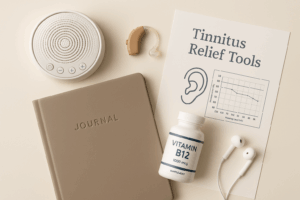
Aim of masking is to not completely block the ringing, but to make it less noticeable so your brain pays less attention to it.
Many people find relief with background sounds such as white noise, pink noise, rainfall, ocean waves, flowing water, a soft fan or soft instrumental sound can help mask tinnitus.
The best sound varies from person to person, so try different options and choose the one that feels most comfortable.
If your tinnitus suddenly becomes louder, try this simple 2-minute reset:
Step 1: Pause
Remind yourself that many tinnitus spikes are temporary. Avoid checking or repeatedly focusing on the sound.
Step 2: Add Gentle Background Sound
Play soft white noise, rainfall, ocean waves, or a fan at a comfortable volume. The aim is to reduce the contrast with silence, not to completely mask the tinnitus.
Step 3: Slow Your Breathing
Breathe in through your nose for 4 seconds and breathe out slowly for 6 seconds. Repeat for 2 minutes to help reduce your body’s stress response.
If you notice that your tinnitus spikes after stress, poor sleep, loud noise, caffeine, or illness, read my guide on common tinnitus triggers and how to avoid them.
Learn when tinnitus can be treated and how therapies such as CBT, TRT, and sound therapy are used in my guide tinnitus causes and treatment.
The most effective tinnitus relief technique depends on the situations in which your tinnitus becomes more noticeable.
| Situation… | You could start with… |
|---|---|
| Is more noticeable in quiet surroundings | Gentle background sound or white noise |
| Becomes worse during stress or anxiety | Slow breathing, relaxation, or CBT-based coping techniques |
| Is associated with hearing loss | An ENT evaluation and hearing aids, if recommended |
| Disturbs your sleep | Background sound at bedtime and good sleep hygiene |
| Changes with jaw movement or neck tension | An ENT assessment for TMJ or neck-related problems |
Supportive products such as U-shaped neck pillows may help if neck tension worsens your symptoms.
Magnesium supplements should only be taken if advised by your doctor or if a deficiency is identified.
Finding the right relief technique often takes a little trial and adjustment.
Even good tinnitus relief techniques may not work if they are used incorrectly. Avoid these common mistakes:
Choose one or two techniques and use them consistently before trying something new. Frequently switching between different methods may make it harder to know what actually helps you.
If your tinnitus is persistent, getting worse, affecting your sleep or daily life, or is associated with hearing loss, dizziness, or ear pressure, it’s important to have an ENT evaluation
If your tinnitus is persistent, worsening, or affecting your sleep and quality of life, an ENT evaluation can help identify treatable causes and guide the most appropriate treatment.
Learn more about my Tinnitus & Hyperacusis Clinic.
📞 Book Your Tinnitus Evaluation: 9322229159
Some techniques, such as background sound or deep breathing exercises, may help you feel calmer within minutes during a tinnitus spike. However, adjusting sleep habits and stress management and training your brain need regular practice over time
Avoid sitting in complete silence, playing masking sounds too loudly, or repeatedly checking whether the tinnitus has changed.
These habits can make the sound seem more noticeable. Instead, use gentle background sound, stay calm, and give the spike time to settle.
Yes. White noise, pink noise, rainfall, or nature sound apps can help many people mask the ringing, particularly in quiet environments or at bedtime.
Start with gentle background sound, especially if your tinnitus is more noticeable in quiet surroundings. The best technique depends on your symptoms, hearing, and individual triggers.
No, as long as you keep the volume safe and comfortable. The sound should act as a soft whisper behind your ear never loud enough to completely mask your tinnitus, which can strain your hearing pathways.

Hi, I’m Dr. Archana Jhawar, an ENT & Vertigo specialist with 25 years of experience. I specialize in tinnitus, vertigo, ear, nose and throat care, and ENT surgeries. I practice at Neoalta Clinic, Vashi, and Kokilaben Dhirubhai Ambani Hospital in Navi Mumbai.
I have advanced training in vertigo management and REBT(CBT), combining evidence-based care with a compassionate approach. Beyond medicine, I enjoy reading, writing, music, yoga, and photography.
Why Vertigo Happens Even When Your Brain MRI Is Normal
Sinus Headache vs Migraine: How to Tell the Difference
Home Sleep Study vs Lab Sleep Study: Which One Do You Really Need?
Snoring, Gasping, or Fatigue: Is it Nasal Allergy or Sleep Apnea?
Nasal Allergy and Sleep Problems: Why You Feel Tired All Day