
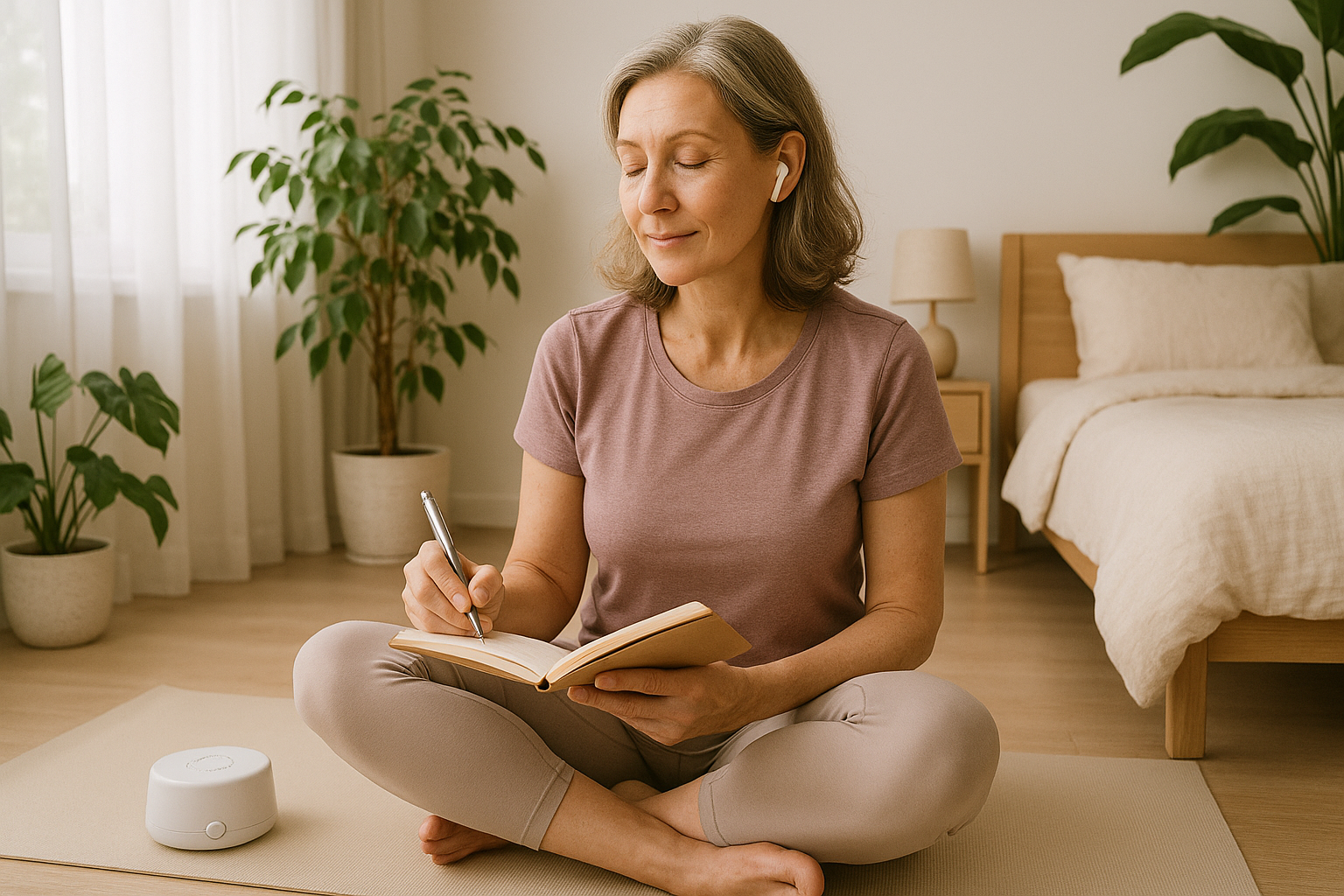
Tinnitus, a persistent ringing, humming, buzzing, or whistling sound in the ears, follows you through the day, wakes you in the night, and sometimes, grows louder during quiet moments.
While there isn’t a single daily habit that eliminates tinnitus, a consistent routine can help make it less noticeable and easier to live with.
In this guide, I’ll share an ENT-guided daily routine with simple morning, midday, evening, and bedtime habits that can support better sleep, lower stress, and improve your overall well-being.
I’m Dr. Archana Jhawar, ENT specialist in Navi Mumbai.
TL;DR: A consistent daily routine can help make tinnitus easier to live with.
Simple habits such as morning breathing exercises, regular physical activity, healthy eating, stress management, and a relaxing bedtime routine with gentle background sound can support better sleep, reduce stress, and make tinnitus less noticeable over time.
Small daily habits often have a bigger impact than occasional changes.
This routine is designed to help you build healthy habits that support better sleep, reduce stress, and make tinnitus easier to manage over time.
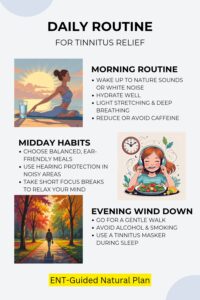
Wake up with nature sounds or white noise
Avoid silence. Tinnitus loves silence. Soft background sounds can mask the ringing.
Hydrate well
Drink 1–2 glasses of water. Dehydration may worsen tinnitus in many patients.
Stretch and breathe
A short breathing exercise (like 4-7-8 breath) helps relax your nervous system and reduce anxiety-linked flare-ups. My favorite is bramari pranayama.
Move
Do 15 min work out or yoga, dance any movement routine. My favourite is bhramari pranayama, in my experience it helps. Many scientific studies prove this.
(Reference – Shetty, H.N. & Acharya, D. “Bhramari Pranayama in Tinnitus: A Systematic Review”, Indian Journal of Otology, Jul–Sep 2023)
Notice whether caffeine affects your tinnitus. Some people are sensitive to caffeine, while many are not.
If you notice your tinnitus becomes worse after coffee or tea, try reducing it gradually rather than stopping suddenly.
Take prescribed supplements
Vitamin B12
Use hearing protection
If you’re in a noisy job or location, wear earplugs or earmuffs.
Focus breaks
Tinnitus may worsen with fatigue. Take short, mindful pauses between tasks.
Avoid long periods of complete silence
Soft background sound may help if you work in a very quiet environment.
Move gently
A 20-minute walk, light yoga, or tai chi can improve blood flow and lower stress.
Limit screen time
Reducing screen time before bed may help improve sleep quality, which can indirectly reduce the impact of tinnitus.
Set a sound pillow or sleep noise machine
Low-volume sounds like ocean waves, rain, or pink noise can help you sleep better.
Avoid alcohol & smoking
Both are known tinnitus triggers. Reducing them helps long-term improvement.
Keep your bedroom comfortably quiet rather than completely silent.
Do gentle stretches
Follow digital detox (no screens 1 hour before bed)
Can use sound pillow, white noise machines or a fan instead of complete silence
Write gratitude journal & coping statement
Deep breathing 4-7-8 breath in bed.
Journal your tinnitus pattern
Track what worsens or relieves it. This helps identify patterns.
Practice mindfulness or meditation
Apps like Insight Timer, Calm, or ENT-guided sound meditations are great tools.
Limit negative media
Stressful news, loud entertainment, or overthinking can increase symptom perception.
Quick Tinnitus Check
Save this Daily Tinnitus Relief Routine
A simple morning, midday & evening ENT-approved guide to ease ringing in your ears naturally.

Following a healthy daily routine is an important step, but if your tinnitus continues to affect your sleep, concentration, or quality of life, visit an ENT.
At Neoalta Clinic, Vashi, I provide comprehensive tinnitus evaluation, hearing assessment, tinnitus matching, and management plans.
Learn more about my Tinnitus & Hyperacusis Clinic.
📞 Book Your Tinnitus Consultation: 9322229159
Looking for professional tinnitus treatment? Explore Is there any permanent cure for tinnitus?.
Need practical techniques you can start using today? Read my guide to tinnitus relief techniques.
New to tinnitus? Start with my complete guide to tinnitus causes, diagnosis, relief options, and more.
Yes. Healthy daily habits such as good sleep, stress management, gentle background sound, regular exercise, and hearing protection can make tinnitus easier to manage over time.
Avoid spending long periods in complete silence if it makes your tinnitus more noticeable. Avoid loud noise, high caffeine, alcohol, late nights, and too much screen time.
You do not need to cut it out completely unless you track a direct volume spike immediately after consumption. Try lowering your intake slowly or switching to green tea to see if your symptoms improve.
Yes. Following a regular routine for sleep, meals, exercise, and relaxation can help reduce stress and support better sleep, which may make tinnitus easier to manage.
Yes, but be flexible. If you’re feeling tired or overwhelmed, focus on one or two simple habits such as gentle background sound, relaxation, or getting enough rest.
Missing part of your routine occasionally is okay. What matters most is returning to your routine when you feel better.
Yes. For many people with tinnitus, complete silence makes the ringing more noticeable because there are no other sounds for the brain to focus on.
Gentle background sounds, such as soft music, rainfall, ocean waves, white noise, or a fan, can make tinnitus less intrusive, especially while working, relaxing, or trying to sleep.
Hi, I’m Dr. Archana Jhawar, an ENT specialist with over 24 years of experience. I specialize in tinnitus treatment, vertigo , ear care, and ear surgeries, practicing at Neoalta Clinic, Vashi, and Kokilaben Dhirubhai Ambani Hospital in Navi Mumbai. I’ve trained in vertigo management and Rational Emotive Behavior Therapy (REBT), combining science with compassion to offer holistic, evidence-based care. I’m passionate about writing, poetry, music, yoga, and photography.
Sinus Headache vs Migraine: How to Tell the Difference
Home Sleep Study vs Lab Sleep Study: Which One Do You Really Need?
Snoring, Gasping, or Fatigue: Is it Nasal Allergy or Sleep Apnea?
Nasal Allergy and Sleep Problems: Why You Feel Tired All Day